Tell a local repair pro what your furnace is doing.
The furnace is running. You can hear it, maybe even feel warm air at the vent. But the house won't hold heat, or one room stays cold no matter what the thermostat says. That gap between the furnace working and the house warming up is almost always a specific, fixable problem, not something wrong with the whole system.
It could be the blower pulling air through but not enough of it reaching the far rooms. It could be a flame that lights, then cuts out before the house catches up. It could be the thermostat telling the furnace a different story than what's actually happening in your living room. Each of those points to a different part, and a different fix.
With gas prices and electric rates both high in Rhode Island, a furnace that runs long hours without actually heating the house costs you twice: once in the gas it burns and again in the time you spend cold. Figuring out which part is behind it matters more here than almost anywhere else.
This is also not a problem you want three different companies calling you about. A local contractor who works on furnaces like yours all winter, in houses like yours, has likely already seen this exact complaint this season. Once you answer a few questions about what your furnace is doing, you're matched with one licensed contractor near you, not a handful. They'll reach out directly to look at what's actually happening in your house.
The answer below walks through the usual reasons a furnace runs without warming the house. Read through it, see what matches what you're noticing. If it's time to have someone look at it, the button on this page is how you start that.
Why is my furnace running but my house still cold?
Your furnace is on, maybe you can hear it running, but the rooms stay cold or one part of the house never catches up. In a Rhode Island winter that gap matters fast, especially with gas and electric rates what they are here. Before you touch the thermostat again, it helps to know what's actually keeping the heat from reaching you.
The furnace is heating, but something between it and the room is stopping the warm air
A furnace that runs but doesn't warm the house is usually moving less air than it should. A clogged filter, a blower motor losing strength, or ductwork that's leaking warm air into the basement or attic before it reaches a vent are the common reasons. Sometimes it's simpler: a thermostat set to "on" instead of "auto" runs the fan constantly, even when the burner has shut off, so you feel cool air and assume the furnace has quit. None of this means the furnace is failing outright. It means something downstream of the burner isn't doing its job, and that part usually needs a technician to find rather than guess at.
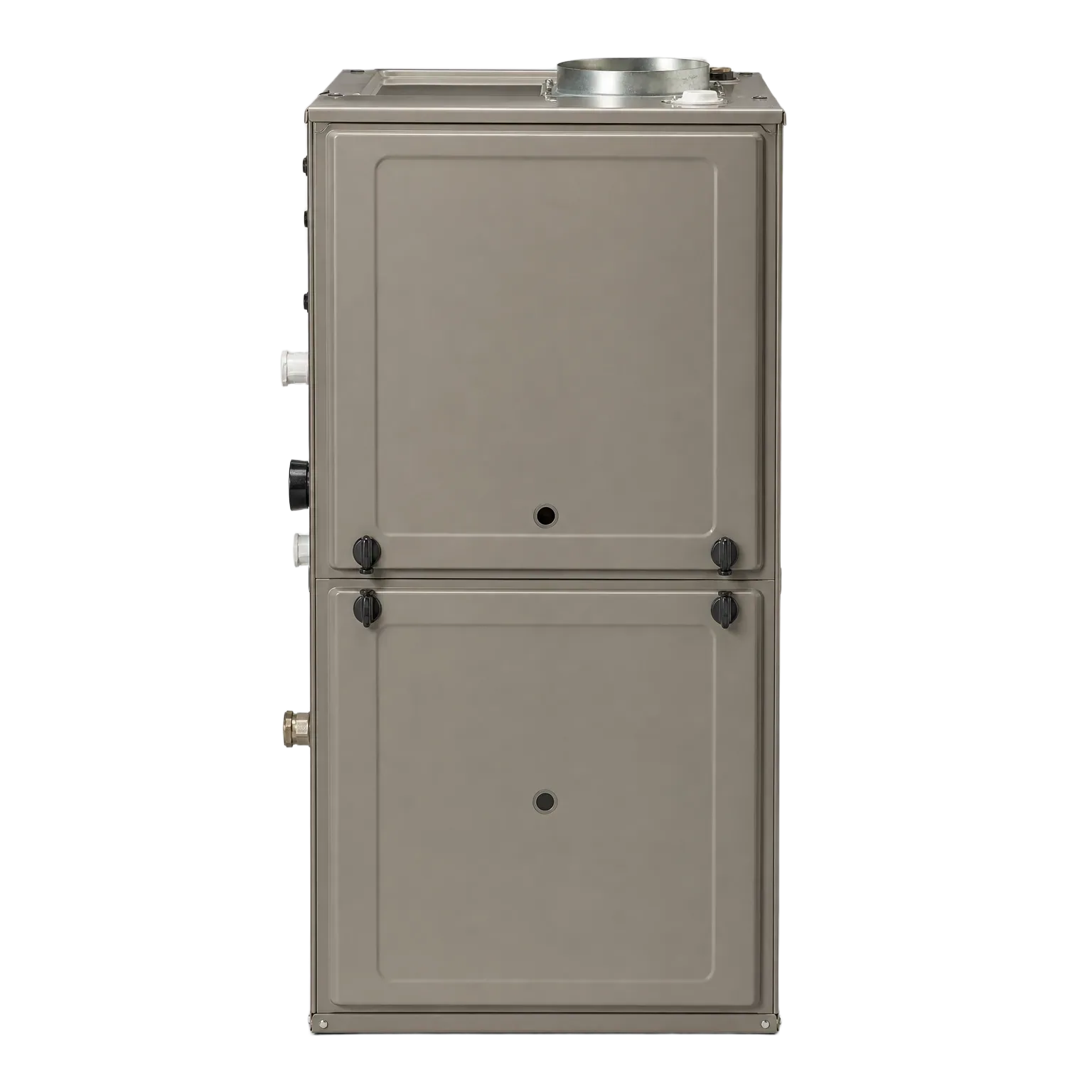
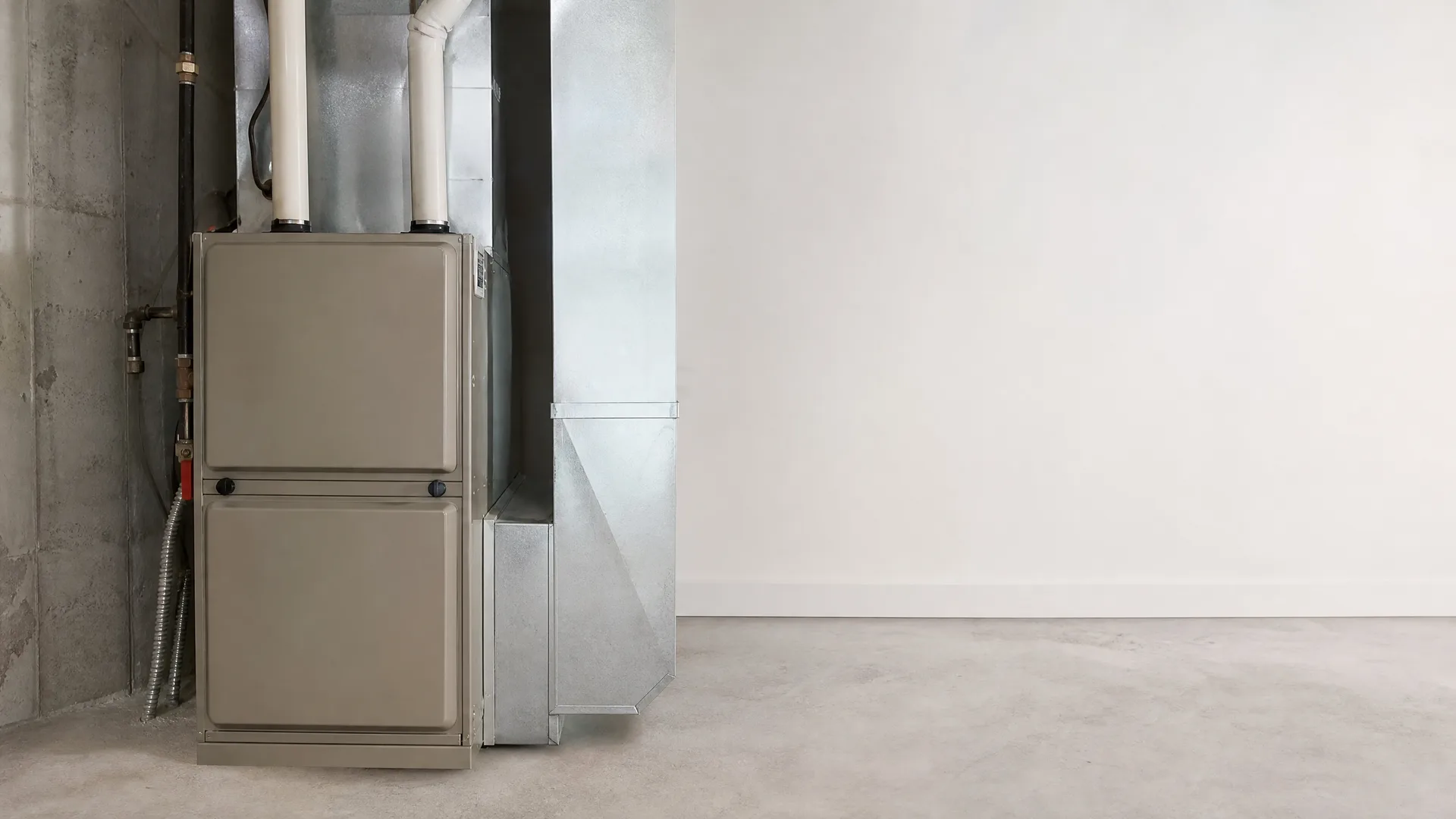
Furnace running the way it should
Air moves through the duct, the burners cycle on and off, and every room gets its share of heat. A furnace like this one still needs a filter change and a yearly look at the burners and flue to keep working this way.
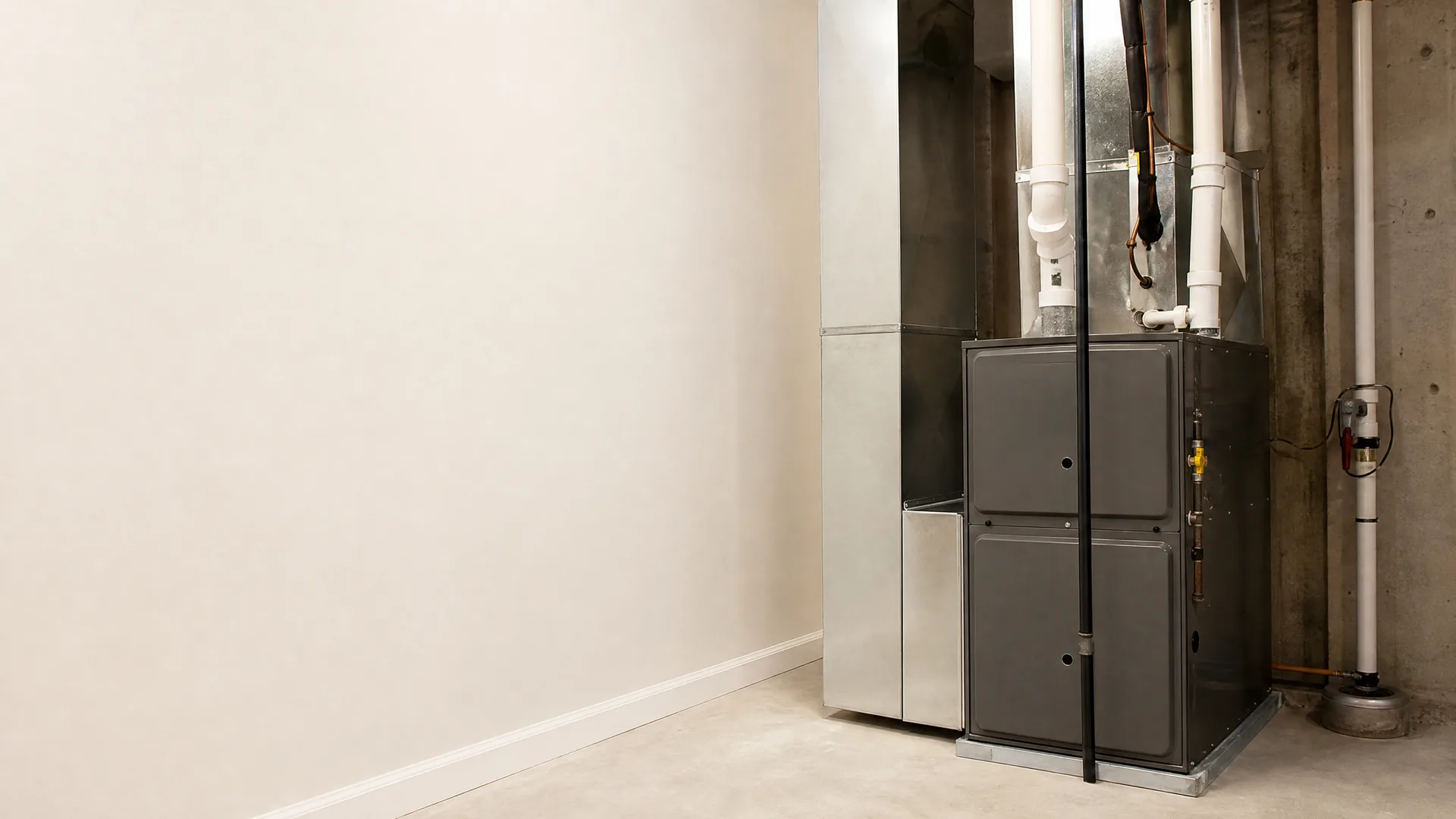
Furnace losing the fight
Rust on the cabinet and plenum like this usually means moisture has been sitting somewhere it shouldn't, often from a cracked heat exchanger or a condensate line that isn't draining. A furnace in this shape can run constantly and still leave rooms cold.
The pro who reaches out is licensed in Rhode Island.
You're not committing to anything by asking.
Why one room stays cold
Ductwork carries heated air to every room from one furnace, and the rooms farthest from it depend on duct runs that have to push that air the whole way. A closed vent, a kinked flex duct, or a return that's blocked by furniture can starve one room while the rest of the house heats fine. If it's always the same room, the furnace itself may not be the problem. A contractor can check static pressure and airflow at that vent to find out.
What a short cycle costs you
A furnace that fires up, runs a few minutes, then shuts off before the house warms is short cycling. It usually points to a dirty flame sensor, a clogged filter restricting airflow, or a thermostat sensing heat wrong. Each cycle uses gas without delivering a full run of heat, so the burners work harder for less warmth in the house. With Rhode Island gas rates, a furnace that short cycles all winter adds up on the bill before it ever gets fixed.
Winter nights average 23°F statewide
At 23°F, a furnace that's cycling but not keeping up shows itself fast. A short cycle or a cold room isn't just uncomfortable, it means the furnace is working harder to chase a temperature it can't hold, night after night.
NOAA nClimDiv 1991-2020 county normals weighted by homes
What a running furnace still costs you
A furnace that cycles longer than it should doesn't show up as a lump sum. It shows up as a gas bill that climbs a little more each month it runs this way, and in Rhode Island that bill is already working against electric rates that sit near the top of the country. The blower and igniter draw power every time the furnace fires, so a unit that's short cycling or running constant stretches to hold one room isn't just loud or slow to catch up. It's burning gas and electric both on a cycle that never finishes its job properly, and that keeps going until something in the system gets looked at.
What it risks if you wait
A furnace straining to heat a house isn't failing all at once, it's wearing down the parts doing the extra work. A blower motor pushed to run longer than it was built for, an igniter cycling more than it should, a heat exchanger working harder to transfer heat it can't fully deliver. None of that announces itself the week it starts. It shows up later as a furnace that won't start at all, usually on the coldest night of the year, when a Rhode Island household with kids or older adults at home can least afford to be without heat while a repair gets scheduled.
A furnace that runs but doesn't warm the house has a cause, and it's one a technician can find by checking the igniter, the blower, the ductwork, and the thermostat itself. You don't need to know which one it is before you call. What helps is having someone local look at it, someone who works on furnaces through every Rhode Island winter and knows which of those parts tends to give out first in homes like yours. When you request service here, you're matched with one licensed contractor near you, not a handful of companies competing for your callback. That means one visit, one diagnosis, and someone who can speak plainly about what's wrong and what it takes to fix it. The furnace running isn't the problem. What it's failing to do with that heat is. Get it looked at, and the house catches up.
Furnace Repair
Get the right pro for your furnace
Step 1 of 3: Equipment
Say what's going on with your furnace, and a pro who works on them reaches out.
Send it once and finding someone is no longer on you.
Send the request today and let a furnace pro reach out to you.
Answer a few questions instead of calling shop after shop.
Describe your furnace job once, to one pro.
Your request stays with one local pro.
Your request goes to one pro, not a list of companies.