
The pilot holds steady
The flame burns blue and stays put against the thermocouple, no flickering when the blower kicks on. The flue pipes are tight, the gas valve opens and closes on its own, and nobody in the house has touched that knob in months.
Tell a local repair pro what your furnace is doing.
Get matchedA pilot light that won't stay lit usually means you've relit it more than once this week, maybe jiggling the gas knob or holding the button down longer each time. It's a small, nagging problem, the kind you want sorted before a cold snap in January leaves you without heat and running a space heater on power rates that are already steep in Rhode Island.
A pilot light needs two things to stay lit: a steady flame and a sensor that confirms it. The thermocouple sits right in the pilot flame, and once it wears out or sits slightly out of position, it tells the gas valve there's no flame even when there is, and the valve shuts off the gas. That's the most common cause. The other is a draft, from a door, a vent, or a cracked flue, pushing the flame around enough to trip the same safety shutoff. Either way, the pilot going out again and again is the furnace doing what it's built to do: cut the gas rather than let it leak. It's worth having someone look at it before a cold stretch catches you without heat.

You wake up because your feet are cold. It's 2 a.m. and the hallway floor is silent where it should be humming. You walk past the window and frost has crept up the edges of the glass. Downstairs, the basement is dark except for the small window on the furnace door, and it's dark too. No blue flame. You already know what you'll find before you crouch down and check. You've relit this pilot three times this week, and the house has been getting colder each time it goes out while you slept, not while you were watching.


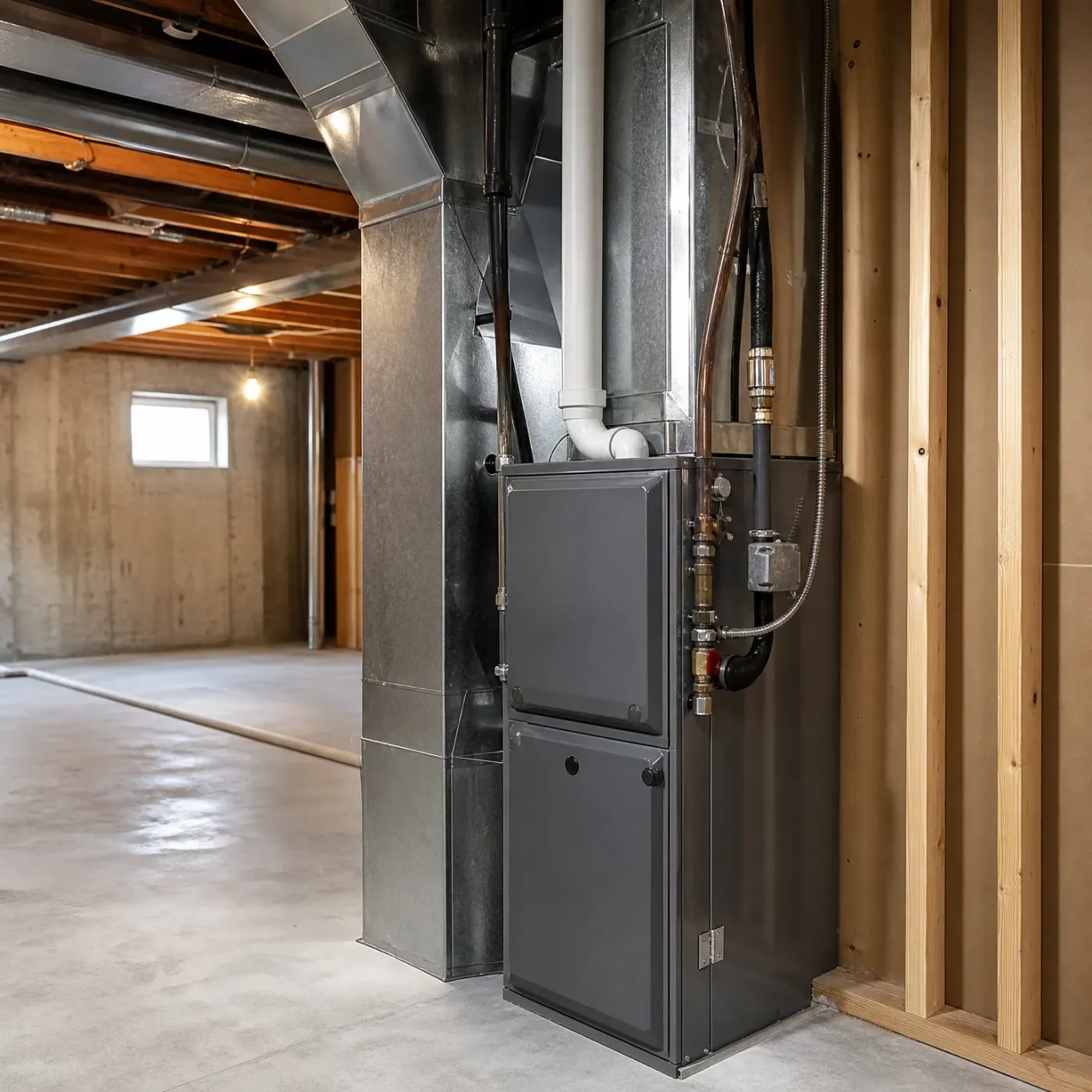
The pilot system runs on a simple safety check. A thermocouple is a small metal rod sitting right in the pilot flame. The heat from that flame generates a tiny voltage, just enough to tell the gas valve to stay open. No flame touching the rod, no voltage, and the valve shuts the gas off. That's the whole job it does.
Soot buildup is the most common reason it fails. A coated thermocouple can't pick up enough heat even with a healthy flame sitting right on it. Sometimes the rod has just worked loose over time and sits half an inch off from where the flame actually burns. Either way, the valve reads it as no flame and cuts the gas, even though the pilot looks fine to you.
Airflow plays into it too. A cracked seal on the flue or a furnace door that doesn't sit flush can let in just enough draft to push the flame sideways, off the tip of the thermocouple, without blowing it out entirely. You relight it, it holds for a few hours or a day, then goes out again.
A dirty pilot orifice causes a different version of the same problem. It starves the flame down to a thin yellow point that never gets hot enough to satisfy the thermocouple in the first place.
Newer furnaces swap the thermocouple for a flame sensor wired to the control board, but a dirty or misaligned sensor shuts things down the same way. On an older standing pilot furnace, the thermocouple is where a tech starts, since replacing it rarely takes more than a few minutes.




The pro who reaches out is licensed in Rhode Island.
Say what's going on with your furnace, and a pro who works on them reaches out.
Sending the form costs nothing.
You might catch a faint gas smell near the furnace right before or after a relight, or notice the burner takes a few tries to catch once the pilot's going again. Some homes show soot around the pilot window or a yellow flame tip instead of blue. None of that is normal, and a pilot that keeps dropping out while you smell gas isn't something to keep relighting on your own. With power rates in Rhode Island as high as they are, a furnace that short cycles or won't hold a flame is also running up your bill while it struggles. Left alone through a Rhode Island winter, a bad thermocouple or a cracked heat exchanger behind it can turn into a furnace that won't run at all on the coldest night.

The flame burns blue and stays put against the thermocouple, no flickering when the blower kicks on. The flue pipes are tight, the gas valve opens and closes on its own, and nobody in the house has touched that knob in months.

Dust has built up on the cabinet and the flame won't hold past a few hours. Every relight is the same routine, and with a Rhode Island winter ahead, a furnace that won't stay lit on its own needs a look before the cold really sets in.

The thermocouple is a thin copper rod sitting right in the pilot flame. Heat from the flame makes it generate a tiny voltage, and that voltage is what holds the gas valve open. It's not a switch someone flips, it's a slow chemical reaction inside the metal, and after enough winters that rod weakens. A furnace that ran fine last January can still fail this way even if nothing else about it changed.

A furnace that sits unused from May through September comes back on in October carrying months of dust in the pilot assembly, and that dust settles right on the thermocouple and the burner ports. Cold snaps push the furnace into longer, more frequent cycles than it saw in fall, and more cycles means more chances for a weak thermocouple or a draft-pushed flame to lose contact and shut the gas valve off.
Winter nights in Rhode Island average 23°F, so your furnace is holding a pilot flame steady for hours at a stretch, not just cycling on and off. Every one of those cold nights is another stretch where a weak thermocouple or a draft near the flue has time to show itself.
NOAA nClimDiv 1991-2020 county normals weighted by homes
Gas flows to the pilot and you light it by hand or with the striker.
The flame heats the thermocouple rod sitting inside it.
The thermocouple sends a small voltage to the gas valve.
That voltage tells the valve to stay open and keep gas flowing.


Rhode Island winter nights average 23°F, according to NOAA climate data. That's cold enough that your furnace isn't cycling on and off the way it does in milder weather. It's running long stretches to keep the house warm, which means the pilot has to hold steady for hours without you checking on it. A thermocouple that's slipped out of position or picked up a coating of soot might hang on fine for a short burn, then quit partway through a long one. If you've noticed the pilot going out more on the coldest nights than on milder ones, that's not a coincidence. It's the same weak part, just under more hours of strain.
NOAA nClimDiv 1991-2020 county normals weighted by homes
A pilot that won't hold is almost always a thermocouple that's worn out, bent out of the flame, or a draft finding its way to it from a loose flue connection. Neither one gets better on its own, and relighting it every few days just means you're down in that basement more often as the weather gets colder. Someone who services furnaces in Rhode Island all winter has seen this exact problem more times than almost any other call, and knows which of the two it usually is before they even get the cover off. You'll be matched with one licensed local contractor, not a handful of companies competing for your callback, so the person who reaches out is someone who actually works on this equipment through the cold months here and knows what tends to fail first. The pilot light itself isn't the problem. It's telling you something behind it needs attention before a cold night makes that clear for you.

Get the right pro for your furnace