Profile view of a bearded man wearing a dark green baseball cap and a dark gray T-shirt against a plain light background.

How long a furnace lasts in Rhode Island

Step 1 of 3: Equipment

How long does a furnace last in Rhode Island?

A furnace in the basement starts acting up, or just gets old, and you want to know if it's worth fixing or if you're looking at a new one soon. There's no single answer printed on the unit, but there's a real range most furnaces fall into, and some signs that tell you where yours stands.

15 to 20 years, most gas furnaces

Most gas furnaces run 15 to 20 years before they need replacing. The burner and heat exchanger wear down with every heating cycle, and after that many winters, the metal starts to crack or the ignition parts fail more often. In Rhode Island, where most homes heat with gas and the furnace runs hard from fall through early spring, that wear adds up on schedule with the rest of the country. What changes the number for you is how well it's been maintained and whether it's had to work through a few winters with a failing part before anyone noticed. A furnace that's original to the house and past 15 years is worth having looked at before the cold really sets in.

A gray-haired, bearded man in a dark coat dusted with snow stands smiling in a dimly lit room with a lamp, mirror, framed art, and a sofa in the background.
An older man with white hair and a beard, wearing a dark snow-dusted coat and scarf, stands in a warmly lit interior hallway with a framed landscape picture, a table lamp and a potted plant behind him, and a snowy view through a window at left.
An older man in a dark snow-flecked overcoat and scarf stands smiling in a warmly lit home entryway, with a glass-paned door showing darkness outside and a lamp-lit room visible through a doorway behind him.
An older man with gray hair and a beard, wearing a dark snow-dusted jacket and scarf, stands smiling in a warmly lit interior hallway with a lit table lamp, a vase of dried branches, and a framed picture in the background.

What actually wears a furnace out

A gas furnace runs through the same cycle every time it fires: igniter lights the burners, heat exchanger warms up, blower pushes air through the ducts, burners shut off, blower runs a bit longer, then stops. Each cycle flexes the heat exchanger with heat and lets it cool back down. Do that thousands of times over a Rhode Island winter and the metal fatigues. That's usually what ends a furnace's life, a cracked heat exchanger, not the blower motor or the igniter. Those parts get replaced along the way. The heat exchanger is the part a contractor can't just swap out and call it done.


Why the furnace runs so much here

Rhode Island winters keep a furnace cycling for months, which adds up to a lot more run hours than a furnace sees in a milder state. More run hours means more heating and cooling cycles on that heat exchanger, and that's what pushes a furnace toward the end of its life sooner rather than later. Electric heat strips or a space heater cost more to run here since power is expensive, which is part of why most homes stick with gas furnaces in the first place. A furnace that's been carrying the full weight of a Rhode Island winter for a long stretch of years has earned a closer look.

An older gas furnace with louvered panels sits on a concrete pad in a basement, connected to sheet-metal ductwork and PVC and metal pipes, with a water heater and wooden stair framing in the background.
Before you get your furnace installation
A gray high-efficiency furnace with white PVC vent pipes stands beside galvanized sheet-metal ductwork in a basement with a concrete floor, with a wooden staircase and railing at left.
After you get your furnace installation

A furnace doesn't fail from age alone. It fails from what happens to it cycle after cycle. The heat exchanger is the part that decides whether a furnace gets repaired or replaced, since a crack in it means the whole unit goes. Short cycling does more damage than steady runtime, because the igniter and blower motor take the wear of firing on and off instead of running a full cycle through. An oversized furnace makes this worse. It never struggles to heat the house, but it short cycles constantly, and that's what ages it early. A dirty filter lets dust settle on the blower motor and heat exchanger, so both parts work harder than they should just to move the same air. Venting matters too. A furnace sharing a chimney with a water heater corrodes faster than one with its own vent pipe. In Rhode Island, furnaces run from around October through April, and every month of cycling in that stretch adds to all of this.

What Wears A Furnace Out

  • The heat exchanger is the part that actually fails a furnace, since cracks in it mean the whole unit gets replaced rather than repaired.
  • Short cycling, where the furnace fires on and off instead of running a full heat cycle, puts more wear on the igniter and blower motor over a winter than steady runtime does.
  • A furnace sized too large for the house short cycles constantly, which wears it out faster even though the oversized unit never struggles to keep up.
  • Dust and debris pulled through a dirty filter settle on the blower motor and heat exchanger, making both work harder to do the same job.
  • A furnace that vents through a chimney shared with a water heater corrodes faster than one with its own dedicated vent pipe.
  • Rhode Island's gas furnaces run from around October through April, and every one of those months of cycling adds to the wear tracked above.
A gray furnace with sheet-metal ductwork, PVC vent pipes and a yellow gas line stands on a concrete basement floor beside wooden stair framing.
A furnace still running clean keeps an even flame and heats the house without strain on the gas bill.
An older gas furnace with a louvered front panel stands on a concrete basement floor beside galvanized sheet-metal ductwork, a metal flue pipe, gas piping and a flexible conduit along a concrete wall.
A furnace on its way out short cycles and leans harder on the blower and igniter until something in it gives.
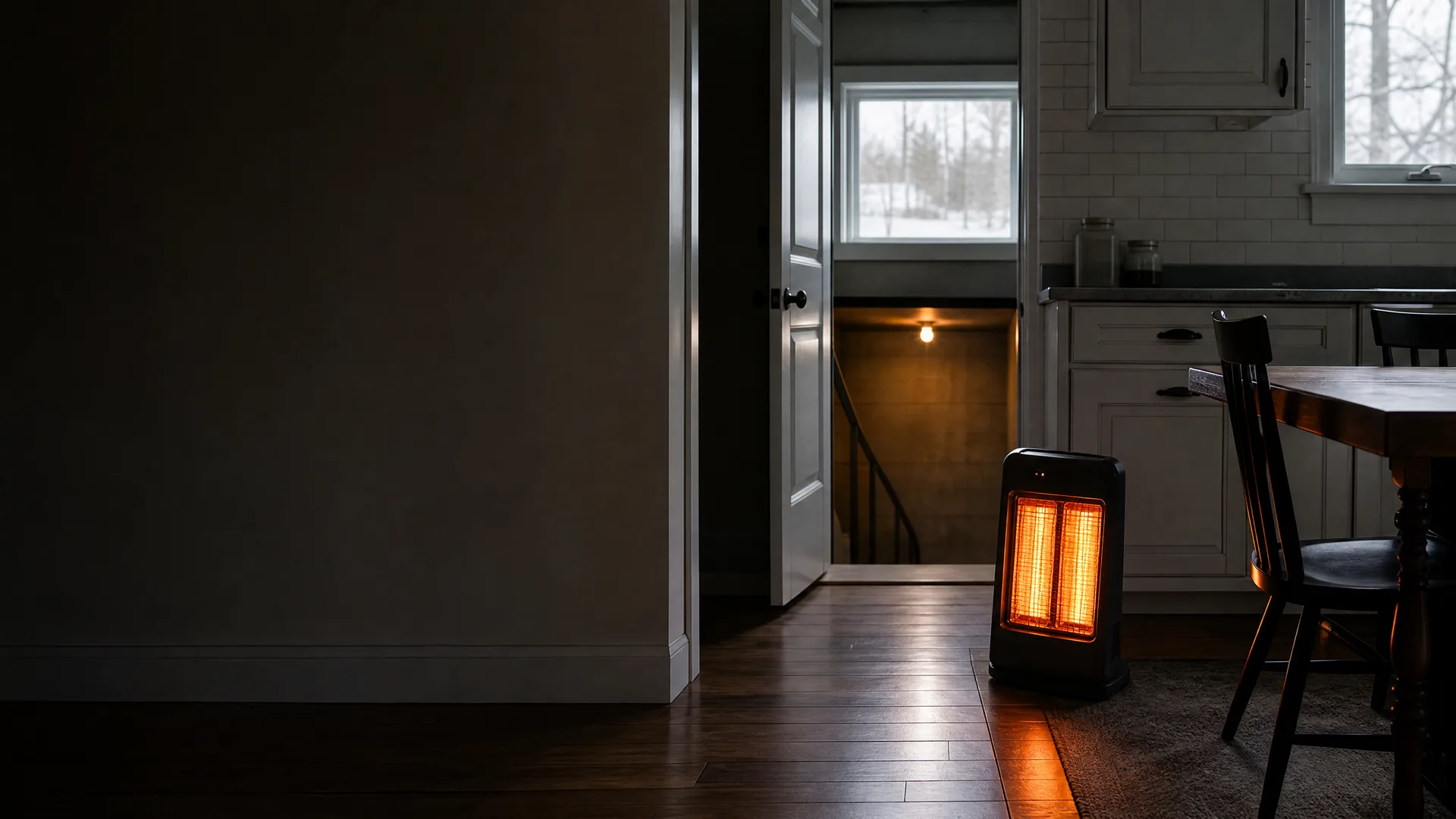
A portable electric space heater with glowing orange elements stands on a dark wood floor in a dim room beside an open door leading to a lit stairway, with a kitchen counter, window and wooden table and chairs at right.

You're up before the rest of the house, and the kitchen is cold enough that you can see your breath near the window. The space heater is going by the table, its coil glowing orange, because the furnace downstairs quit sometime overnight. The basement door is open behind it, and you've already been down there once with a flashlight, looking at the unit like it might explain itself. It won't. Outside it's still dark, March in Rhode Island, the kind of morning where the cold hangs on past sunrise. You've got coffee going and a hand on the space heater's cord, deciding how long you can wait before someone needs to look at what's wrong.

Is your furnace telling you it's done?

You hear it kick on more than it used to, running short bursts instead of one steady cycle. The air coming out of the vents feels cooler than it should, so you bump the thermostat up a couple degrees just to stay comfortable. Some rooms heat fine and others stay cold no matter what. There's a burnt dust smell the first few times it fires in the fall, and some years it lingers longer than it should. The gas bill creeps up even though you haven't changed how you keep the house. If the burners look more orange than blue, or the pilot light area smells like gas, that's not a wait and see situation. A furnace running this hard through a Rhode Island winter, from October to April, with ice and single digit nights in the mix, has less room to limp along than one working through a mild stretch.

A gray high-efficiency furnace in a basement with PVC venting pipes, a yellow gas line, metal ductwork, concrete walls and floor, and a wood-framed stairway at left.

Furnace running clean

This is a two-stage furnace venting through PVC pipe, with the gas line and supply plenum all tight and in place. It fires, heats evenly, and shuts off without drama. A setup like this is doing what it's supposed to, cycle after cycle, with nothing straining to keep up.

A beige furnace with a louvered front panel and metal ductwork stands on a concrete basement floor beside pipes and a white cylindrical water heater.

Furnace on its way out

Older furnaces like this one, with louvered vents and sheet-metal ductwork, often sit near the water heater and run years past when they should've been looked at. The condensate lines and gas connections are still doing their job here, but a unit this age is closer to the end than the middle.

A woman wrapped in a cream textured blanket sits in an armchair beside a lit lamp and a dark window, with an open book in the foreground.
A bearded man in a plaid flannel shirt stands indoors looking out a frost-covered window, with a steaming dark blue mug on the wooden sill and snow-covered trees outside.

Matched to your furnace job

One request ends the search for a furnace installer.

No fee to send it, and nothing to sign.

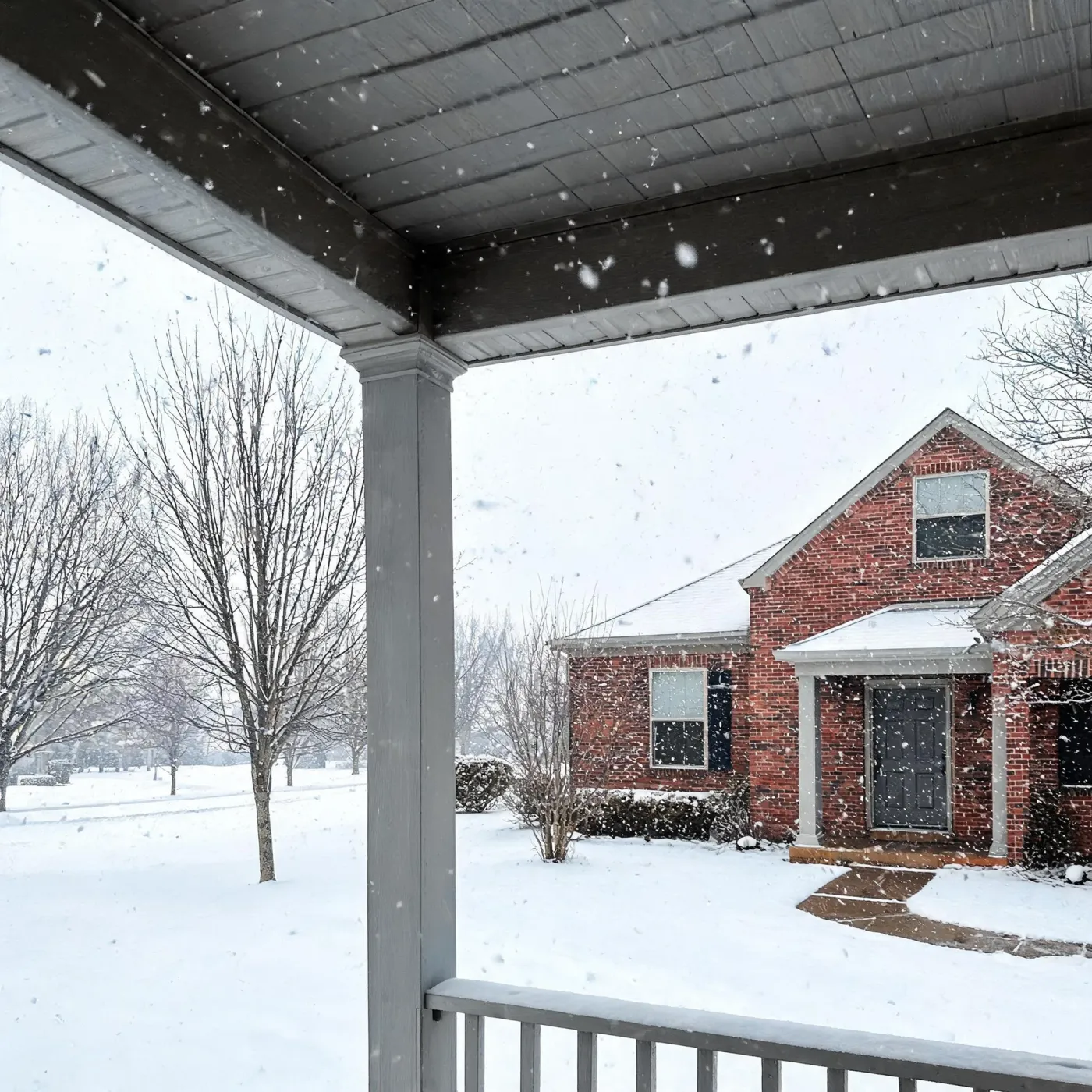
View from a covered porch with a white post and railing toward a red brick house across a snow-covered yard, with falling snow and bare trees.

Winter nights statewide average 23°F, per NOAA. That's the kind of cold that keeps a furnace running most of the night instead of cycling on and off a few times. More run time means more hours on the blower and more igniter cycles over a season, and that adds up faster than mild winters would. If your furnace is already older, this is the stretch where a weak unit falls behind, running longer to hold the same temperature and still leaving a room or two cooler than the thermostat says. You'll notice it most upstairs, or wherever the ducts run longest from the basement.

NOAA nClimDiv 1991-2020 county normals weighted by homes

Keep Repairing or Replace

Keep repairing

  • A cracked heat exchanger means replacement no matter what else on the furnace still works fine.
  • Parts for an older furnace can take longer to track down, since some manufacturers stop stocking them after a decade or two.
  • Each repair fixes what failed that visit, but it doesn't reset the wear on the blower motor or the igniter.
  • A furnace that's short cycling will keep stressing the same parts even after one of them gets replaced.
  • If the furnace is only a few years old, a repair is usually the cheaper and faster path back to heat.
  • Rhode Island winters put a lot of hours on a furnace, and an older unit nursed along has to work harder on the coldest nights.

Replace now

  • A new furnace comes with a warranty on the heat exchanger and other major parts, instead of paying out of pocket for whatever fails next.
  • Furnace installation is a planned job on your schedule, not an emergency repair call during a cold snap.
  • A new furnace heats evenly from the first cycle, without the short cycling that wears on an aging unit.
  • Since most homes in Rhode Island heat with gas, a new furnace still runs on the same gas line and venting already in place.
  • Power here runs expensive, and a furnace that short cycles or runs long due to age adds to those electric costs from the blower.
  • Once you're matched with a contractor, they can look at your specific furnace and tell you whether replacement makes sense for your situation.
A gray high-efficiency furnace stands on a concrete basement floor beside galvanized sheet-metal ductwork, with white PVC vent pipes, gas and water lines, and unfinished wood framing behind it.

What a furnace running right looks like

The flue pipes stay white, the burners light on the first try, and the blower pushes air through the ducts without rattling the sheet metal. Gas line and electrical connections stay tight, and nothing around the unit needs attention.

A beige furnace with two louvered front panels stands on a concrete basement floor beside galvanized ductwork, metal pipes, and a wooden post.

What a furnace in trouble looks like

The same ductwork and gas lines are there, but the furnace is working harder to do the same job. It cycles more, runs longer to reach the same temperature, and the basement around it gets louder with each season.

A man in a dark blue shirt stands in an open front doorway of a stucco and wood-clad house, facing a blond woman seen from behind in the foreground on a stone walkway.

What an old furnace is costing you right now

A furnace losing its edge doesn't quit all at once. It runs longer to hold the same temperature, and that extra run time shows up on the electric bill that moves the blower motor and on the gas bill that feeds the burners. Power in Rhode Island already costs more than most of the country, so a furnace working harder than it should costs you more here than it would somewhere else. You might not notice a few extra minutes of runtime each cycle. You will notice it over a full winter.

There's also the risk of when it actually fails. A furnace that's been short cycling for months doesn't pick a convenient night to go out for good. If yours is already showing the signs, the smarter move is lining up a contractor before you're standing in a cold kitchen waiting for one. Once you send the request, you're not the one who has to track down who's available and who can actually take the job. That part gets handed off, and you get a call back from someone matched to what your house needs.

A living room corner with a beige sofa and cushion, a round wooden coffee table holding a pale ceramic vase of eucalyptus stems and a wooden bowl, and a curtained window with a potted plant above a latticed radiator cover in the background.

Winter nights average 23°F statewide

At 23°F, your furnace isn't cycling on and off for a few minutes at a time. It's running long stretches to hold the house at temperature, night after night from December through February. That kind of steady demand is what ages a blower motor and an igniter faster than mild winters do.

NOAA nClimDiv 1991-2020 county normals weighted by homes

A furnace in Rhode Island lasts about 15 to 20 years with normal upkeep, less if it's been short cycling or running long stretches every night to keep up with the cold. Past that age, every winter is a question of whether it starts back up or not, and a cracked heat exchanger ends that question for good. If yours is getting up there, or it's already told you it's done, the choice isn't really repair or replace anymore. It's who you call. Send the form and you're done with the hard part. You won't spend evenings comparing brands or wondering who's licensed and who's just available. A contractor who knows furnaces and knows Rhode Island will reach out, and from there it's their job to figure out what your house needs. That's one less thing sitting on your list on a cold morning.

A wooden front door with six small glass panes and a narrow sidelight, set in a shingled house entry with white trim, reached by stone steps flanked by a planted urn with purple flowers and leafy branches in the foreground.
Exterior corner of a house with beige horizontal lap siding and a black-framed window, with white hydrangeas, ornamental grasses and low plantings along a flagstone patio.
Corner of a house with tan lap siding and a window, a brick step edge, flowering white hydrangeas and green shrubs beside a flagstone walkway leading to a white picket fence and a tree in backlit sunlight.
House exterior with cream horizontal lap siding, a dark-framed window, a black wall lantern beside a wood door, potted shrubs on stone steps, and white and pink hydrangeas in the foreground garden.
Corner of a cream lap-sided house with a white-framed window and dark shingled roof, beside a white-flowering hydrangea shrub, a clipped hedge, mulched bed and lawn.

A furnace pro near you

Once you send the form, finding a pro is off your list.

Hand off the search

Sending the form costs nothing.