
Rhode Island Furnaces

Signs of a cracked heat exchanger in Rhode Island

Step 1 of 3: Equipment

A cracked heat exchanger gives off a few warning signs before it turns dangerous. Watch for a strange smell when the furnace runs, soot inside the cabinet, a flame that flickers or turns yellow instead of burning steady blue, and a carbon monoxide detector that keeps going off. Sometimes you'll notice a hissing or clicking sound coming from inside the furnace itself. The exchanger is the metal chamber that separates the burning gas from the air moving through your ducts. Once it cracks, exhaust gas can leak into that airstream and spread through your house. With gas furnaces running most of the heating months in Rhode Island, a cracked exchanger isn't something to wait on. If you notice any of these signs, shut the furnace off and have it looked at before running it again. This is a safety issue first, not just a repair one, and it needs someone qualified to check it properly.

A basement utility area with a gray furnace, sheet-metal ductwork, pipes, plastic-covered walls, a concrete floor, and a black shelving unit holding storage bins.

Furnace running clean

The burner flame stays steady and blue. No soot around the cabinet, no odd smell when it kicks on. Gas lines and condensate pipes are intact and the metal is sound. This is what a heat exchanger with no crack looks like day to day.

A gray metal furnace with louvered vent panels stands on a concrete basement floor beside galvanized ductwork, gas and plastic pipes, and foil-faced insulation along the ceiling and wall.

Furnace past its prime

Rust on the cabinet doesn't mean the heat exchanger is cracked, but an older furnace like this one has had more years of heating and cooling to stress the metal. Combined with a yellow flame or a carbon monoxide alarm, it's worth having someone check it who knows what a crack looks like from the inside.

What would you actually notice at home

You'd likely notice it when the furnace is running, not before. A smell like formaldehyde or something sharp and sour as the heat kicks on. A thin layer of soot collecting inside the cabinet or around the access panel. The flame through the viewing window flickering or burning yellow instead of a steady blue. Sometimes the furnace shuts itself off partway through a cycle for no clear reason. If anyone in the house gets headaches or feels nauseous or unusually tired when the furnace has been running, especially if it eases up when they leave the house, that's carbon monoxide, and it's not something to wait out. A working CO detector that goes off while the furnace is on means stop using it and get it looked at.

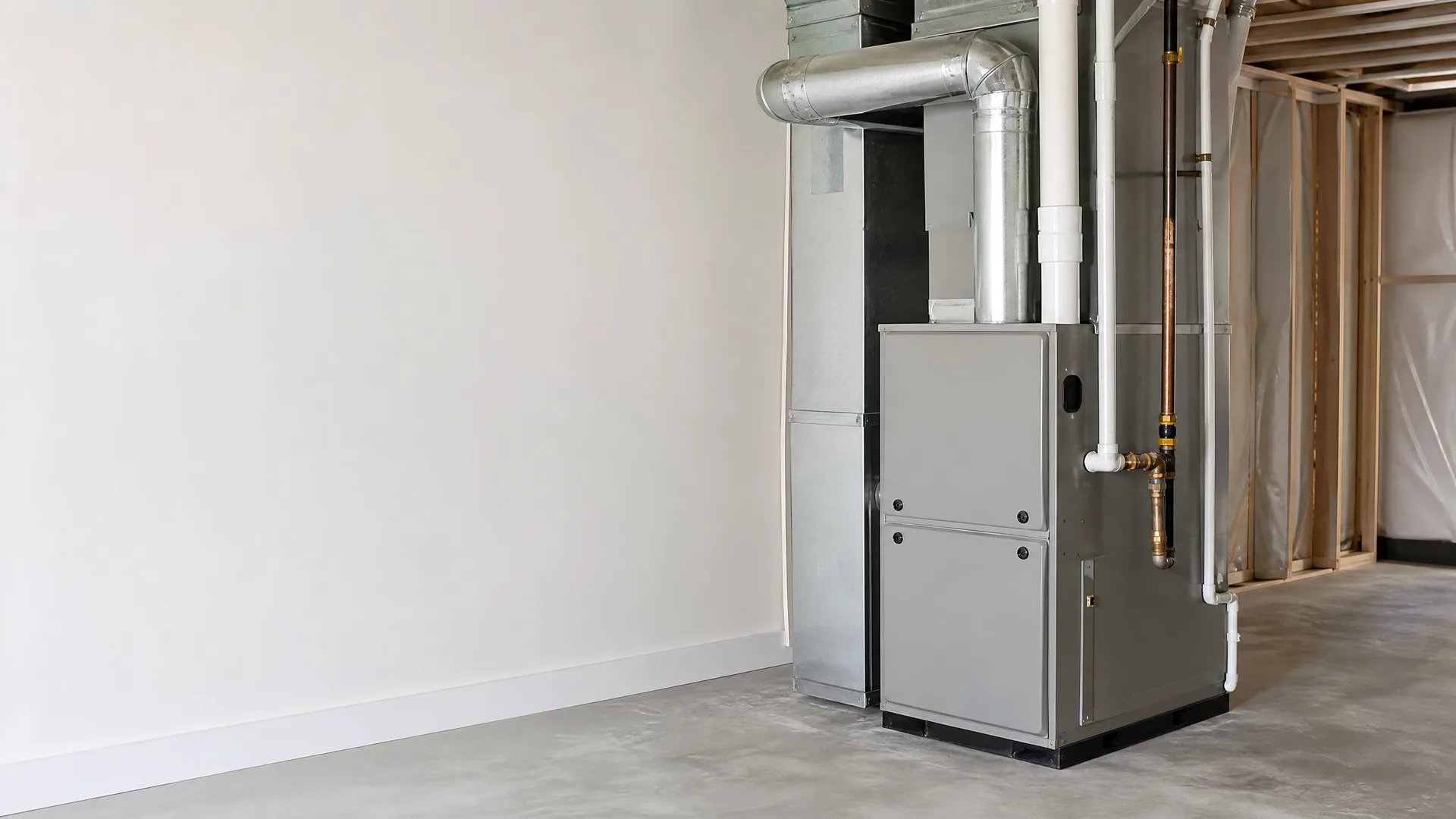
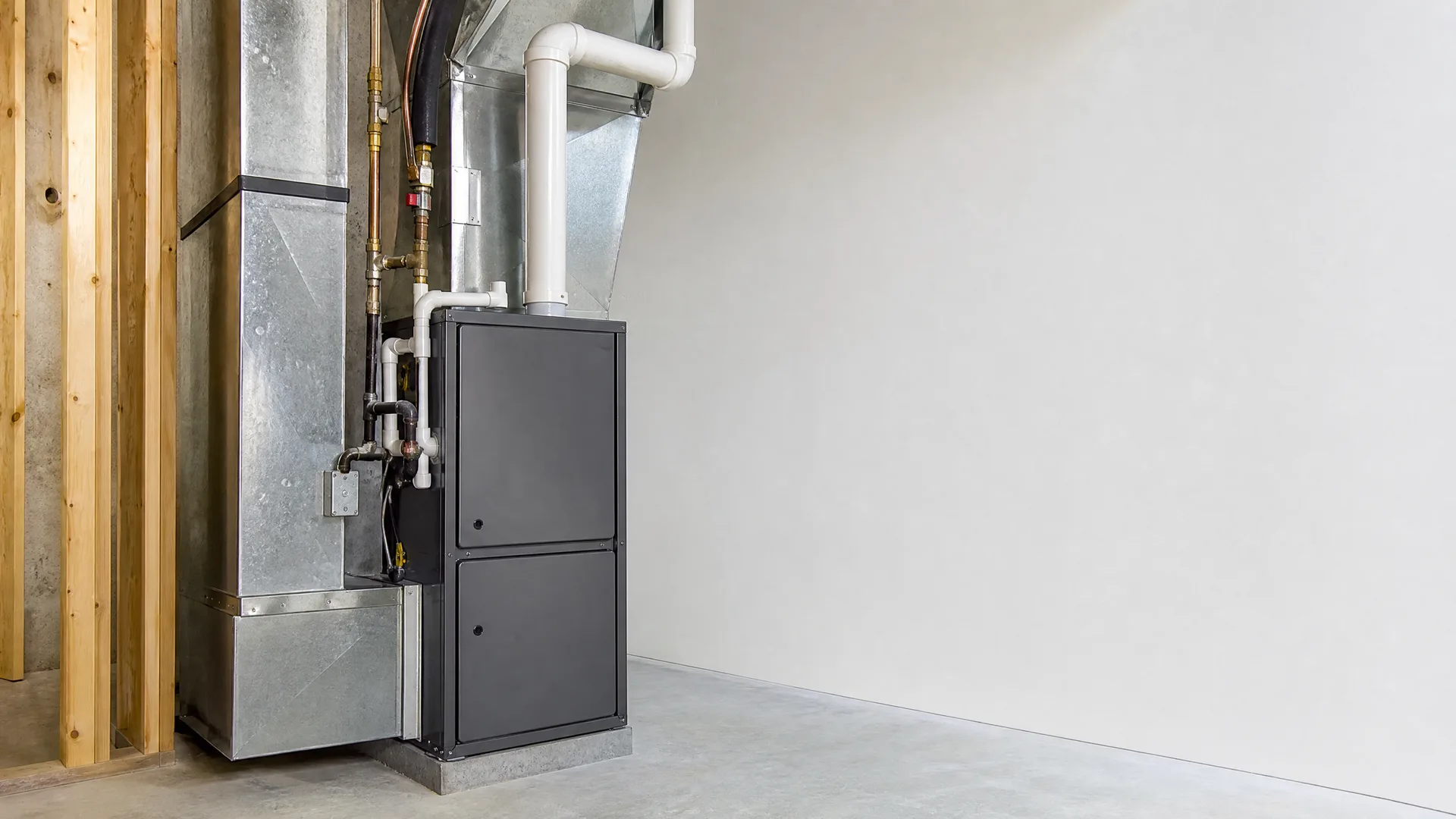
A dark gray furnace connected to galvanized sheet-metal ductwork, white PVC vent pipes and copper piping, standing against a plain light wall in a room with a bare concrete floor and exposed wood framing at left.

Why the metal cracks

A furnace's heat exchanger swells a little every time the burner fires and shrinks back down as it cools. Thousands of cycles over the years and that metal fatigues the same way a coat hanger weakens from being bent back and forth. Rhode Island furnaces run hard from November into March, so the exchanger goes through more of these cycles here than it would somewhere milder. The crack usually starts small, along a seam or a corner, and gets worse with each heating season.

A gray high-efficiency furnace with sheet-metal ductwork, white PVC vent pipes and copper piping stands against a wall in an unfinished basement with a concrete floor and insulated wood stud framing at right.

Why a blower matters here

The blower pulls air across the heat exchanger and pushes it through your ducts. When the exchanger is cracked, that same airflow can pull exhaust gas out through the crack and into the air moving through your house. This only happens while the blower is running, which is why symptoms tend to show up during a heating cycle and ease off once the furnace shuts down. A furnace that short-cycles or runs with the blower on constantly gives this more chances to happen.

Keep Running It or Get It Checked

Keep running it

  • If a crack is confirmed, every cycle pushes exhaust into the air a furnace blower can carry through your ducts.
  • Rhode Island winters mean the furnace runs for months straight, so the number of cycles adds up fast once a crack starts.
  • A carbon monoxide detector may not trip until the leak is already significant, so the furnace keeps venting before anyone knows.
  • Gas prices and electric rates in Rhode Island are both high, and a cracked exchanger often burns less efficiently while it fails.
  • Waiting rarely fixes anything here. The crack doesn't heal itself, and the metal keeps flexing with every heat cycle.

Get it checked now

  • A licensed contractor can pressure test the exchanger or run a combustion analysis to confirm a crack instead of guessing from symptoms alone.
  • You call one local contractor who already knows what tends to fail on furnaces around here, not several companies pulling your number.
  • That skips the usual run of searching, calling around, and explaining the same smell or soot problem to five different people.
  • If the exchanger checks out sound, you've ruled out the dangerous possibility and know what's actually causing the smell or soot.
  • A furnace this old or showing this many signs usually needs a straight answer from someone qualified, not a guess over the phone.
A gray-haired man in a dark long-sleeve shirt sits on a gray sofa in a living room, looking toward a sunlit window with sheer curtains.
A gray-haired man in a dark green sweatshirt sits on a sofa in a living room, looking toward a bright window, with a houseplant, lamp, fireplace and framed art behind him.
A gray-haired bearded man in a dark green collared sweater sits on a sofa in a living room with a window, houseplant, floor lamp and bookshelves, looking off to the side.
A gray-haired man in a dark green sweater sits on a sofa in a sunlit living room, looking off to the side, with a framed landscape painting, dining table and shelving behind him.

How does a technician actually check for a cracked heat exchanger?

You want to know what actually happens during the inspection, not just the warning signs you might notice yourself. If someone's coming to look at your furnace, you want to know they're doing more than a quick glance and a guess, especially with a part that affects whether carbon monoxide ends up in your ducts.

A combustion analyzer and a borescope, not a flashlight and a guess

A technician pulls the burner compartment open and runs a combustion analyzer while the furnace fires, checking the flue gas for carbon monoxide levels that shouldn't be there if the exchanger is sealed. Many also thread a borescope, a small camera on a flexible cable, through the exchanger's chambers to look at the metal directly rather than guessing from the outside. Some run the blower with the burner off and watch for flame movement, since air pulled through a crack will disturb the flame in a way sealed metal won't. A visual check alone can miss a crack hidden on the far side of a chamber, which is why the camera matters as much as the gas reading.

  1. Burner ignites and heats the exchanger metal as gas flows

  2. Metal expands with the heat and the shell flexes slightly

  3. A crack opens where the metal has flexed thousands of times

  4. Blower air passes over the cracked section and picks up exhaust

A beige furnace with two access panels stands against a concrete basement wall, with galvanized sheet-metal ductwork, a white PVC pipe, flexible conduit and insulated ducting around it.
Before you get your furnace repair
A gray furnace with white PVC vent pipes stands beside sheet-metal ductwork in a basement with a smooth concrete floor, exposed wood framing, and plastic sheeting on the walls.
After you get your furnace repair

Explain it one time

The pro who reaches out is licensed in Rhode Island.

There's no charge for the request.

A dark high-efficiency furnace on a concrete pad in a basement, connected to galvanized ductwork, white PVC vent pipes, and copper and black gas piping, with concrete walls and wood framing nearby.
A high-efficiency furnace like this one circulates heat through sound metal, with no odor or soot anywhere near the cabinet.
A gas furnace with a louvered upper panel stands on a concrete pad in a basement, flanked by sheet-metal ductwork, white PVC and metal pipes, and insulated columns.
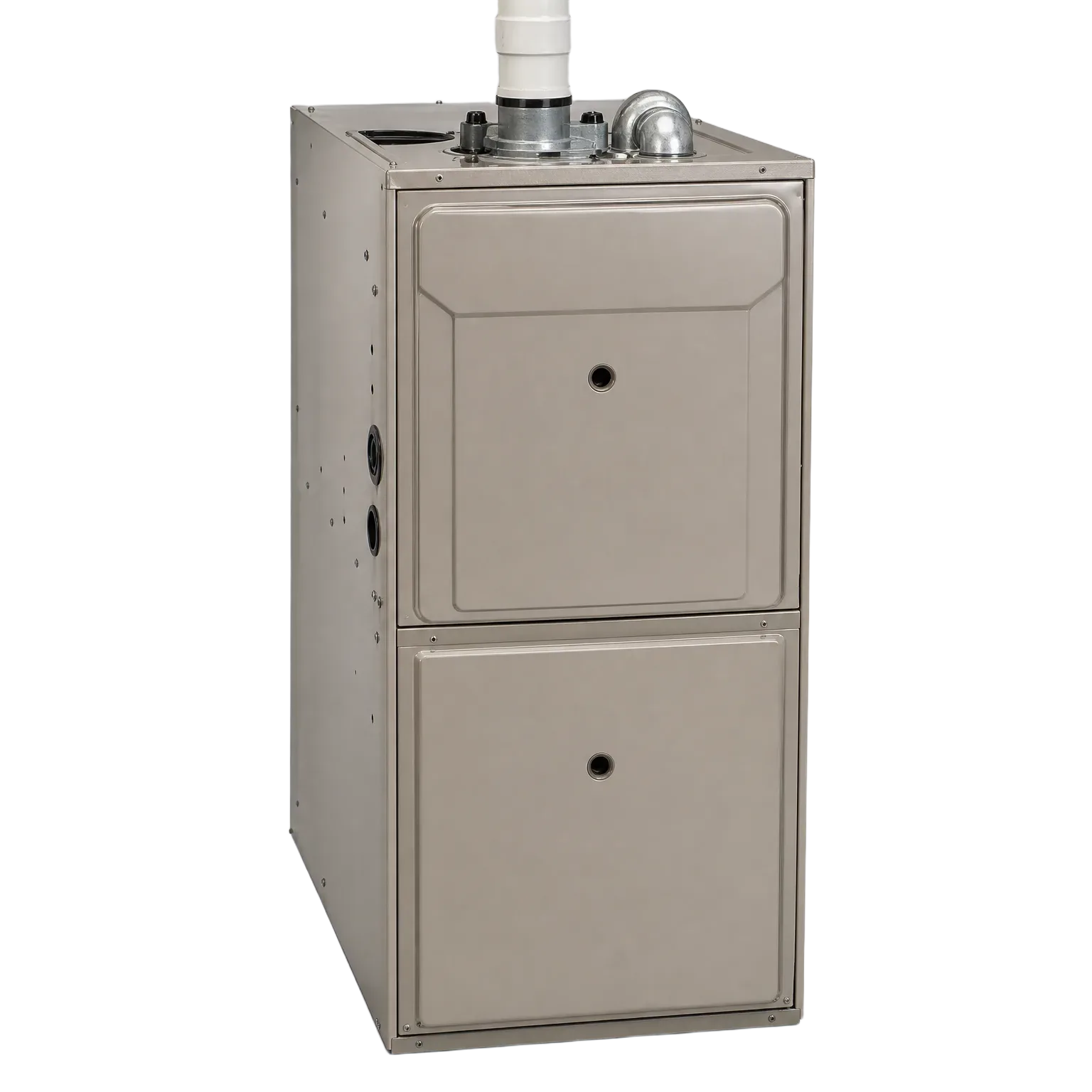
An older furnace like this, especially one past its years, is worth a technician's look if you've noticed a smell or soot nearby.
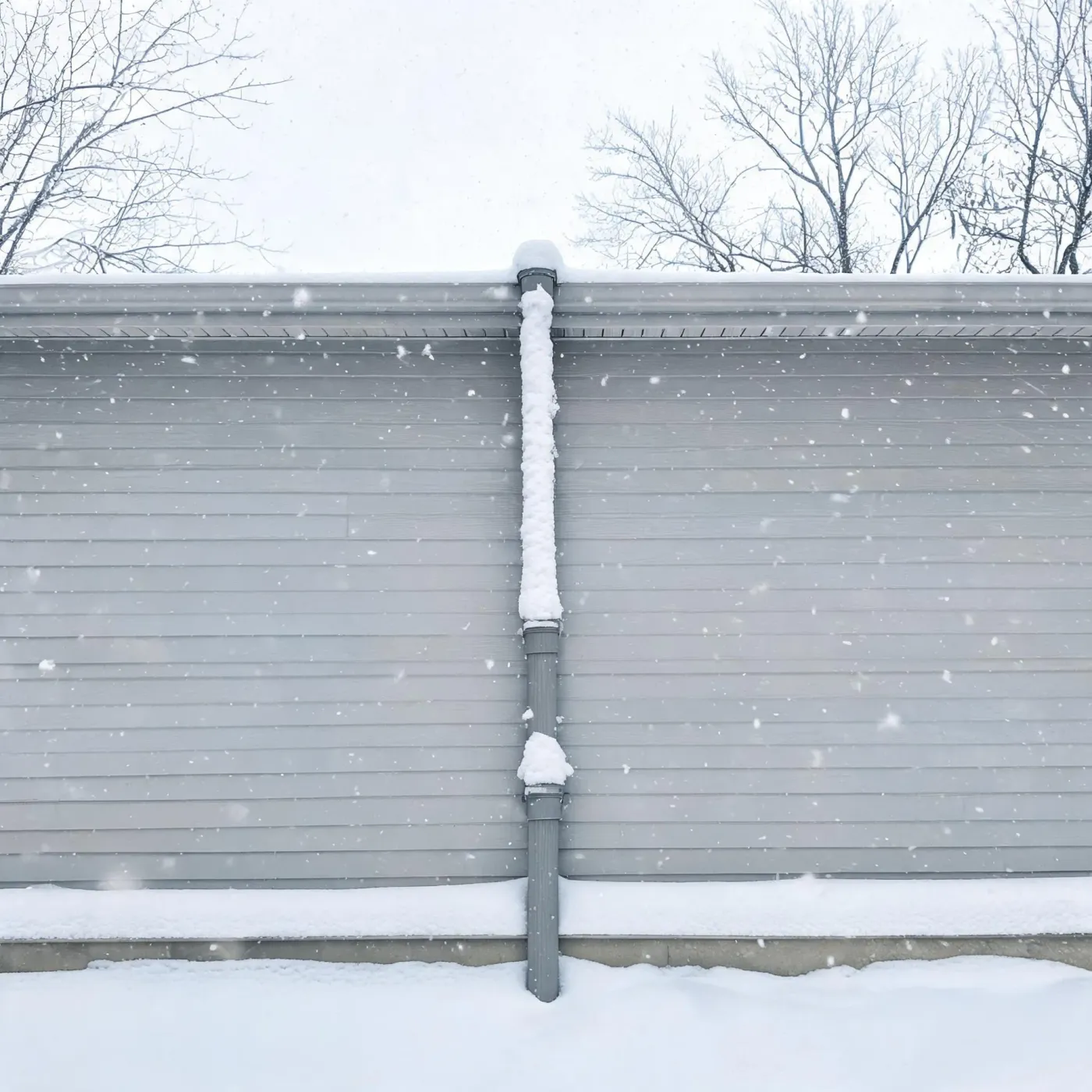
Gray horizontal lap siding on a house exterior with a snow-encrusted downspout running from the gutter to the ground, bare trees behind the roofline, and snow falling.

Winter nights statewide average 23°F, according to NOAA climate data. That kind of cold keeps a furnace cycling on and off for hours at a stretch, all night long, every night, from December through February. Each cycle flexes the heat exchanger a little more. If a crack has already started, those long cold nights are when you're most likely to notice something off, a smell when the burner kicks in, or soot building up faster than it should inside the cabinet. The colder it gets outside, the harder the furnace works to keep up, and the more that metal gets tested.

NOAA nClimDiv 1991-2020 county normals weighted by homes

A middle-aged woman with shoulder-length dark hair, wearing a gray cardigan over a cream top, sits in an upholstered armchair and looks toward a sunlit window, with a shelf holding framed pictures and a plant behind her.
A woman and a child wrapped together in a thick knitted blanket on a sofa, both with eyes closed, with a lit table lamp and houseplant in the dim background.

Replacing the exchanger versus the furnace

A cracked heat exchanger can sometimes be replaced on its own. It depends on whether the part is still available for that model and how the rest of the furnace is holding up. A technician who pulls the furnace apart to get at the exchanger is already looking at the blower, the burners and the ignition system, and can tell you honestly whether those are worth keeping. On an older unit, replacing just the exchanger can mean paying for labor-intensive work on a furnace that fails somewhere else within a year or two.

Why a local technician catches this faster

Someone who works on furnaces around Rhode Island all winter has pulled apart exchangers in homes not far from yours and seen which models crack early and which hold up. That's different from a call center routing your address to whoever's free. One technician comes out, looks at your furnace specifically, and tells you what they find, instead of three different companies each wanting their own look before they'll quote anything. You explain the smell or the soot once, to the person who's actually going to check the metal.

Winter nights average 23°F statewide

At 23°F, your furnace isn't cycling once or twice an evening. It's running long stretches to keep up, night after night through December, January and February. Every one of those cycles flexes the heat exchanger a little more, which is exactly where a crack starts.

NOAA nClimDiv 1991-2020 county normals weighted by homes

A beige high-efficiency furnace with white PVC vent pipes stands beside galvanized sheet-metal ductwork in a basement with a concrete floor, exposed wood studs, and metal piping along the wall.

New furnace, sound metal

This is a high-efficiency furnace with PVC intake and exhaust pipes running to the plenum. The metal shell hasn't gone through enough heating and cooling cycles to fatigue. No soot, no smell, nothing to flag when a technician looks it over.

An older beige furnace with a louvered vent panel stands on a concrete basement floor beside galvanized sheet-metal ductwork, a metal flue pipe and vertical pipes along a concrete wall.

Older furnace, worth checking

This cream-colored cabinet and flexible flue pipe mark an older furnace, the kind that's put in thousands of cycles over the years. If it's been drawing from the same ductwork for a long winter after winter, a crack is the kind of thing a technician should rule out.

A wooden table in the foreground holds a closed laptop and a ceramic mug of coffee, with a spindle-back wooden chair behind it, a beige wall with paneled wainscoting, a window at left, and a kitchen counter with a cutting board, bowl of fruit and greenery at right.

If something's off with your furnace, get it checked

A strange smell, soot near the cabinet, a flame that won't burn steady blue, a carbon monoxide detector that goes off. Any one of those is reason enough to have a technician look at the heat exchanger before you run the furnace again. Rhode Island winters don't give you much room to wait on this once the signs show up.

Finding someone qualified to check a heat exchanger usually means calling around, explaining the same symptoms more than once, and sorting through quotes from people you don't know anything about. This connects you with one licensed contractor in Rhode Island, someone who works on furnaces like yours all winter and knows what a cracked exchanger looks like before it gets worse. You explain it once, to someone who can actually do something about it.

A gray upholstered sofa with a beige cushion and knit blanket beside a curtained window, with a white mug and a book on a dark wooden table in the foreground and a lit lamp in the background.
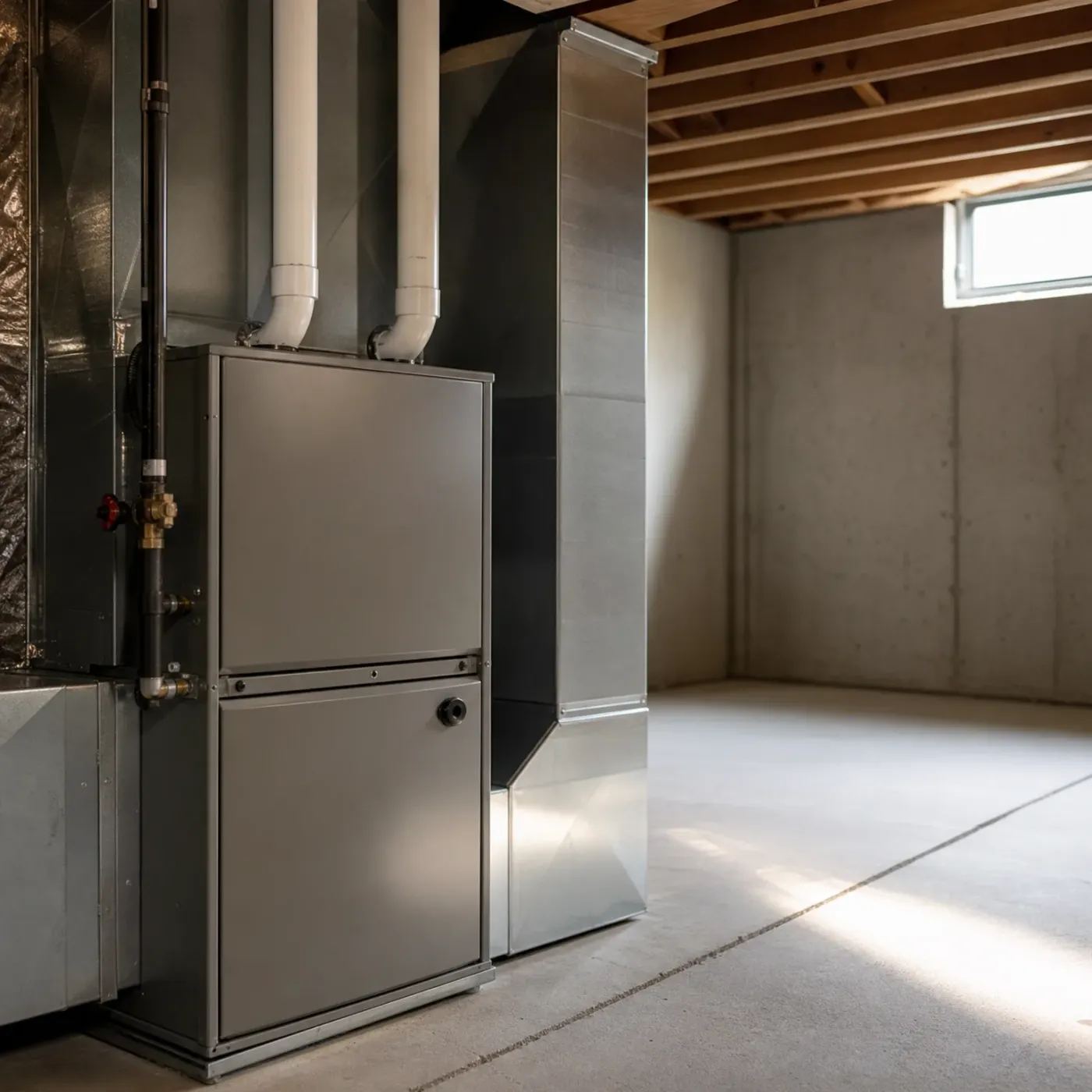
A gray furnace with PVC vent pipes and sheet-metal ductwork stands against a wall in an unfinished basement with concrete floor and walls, exposed wood joists, and a small window.

Skip the calls to every shop

Get a licensed local pro

Only one pro gets your request, so you hear from one company.

You only hire the pro if you want to.