




Signs your furnace won't last a Rhode Island winter

Step 1 of 3: Equipment

What are the signs my furnace won't make it through winter in Rhode Island?

Rhode Island winters run long and a furnace that's struggling in November usually doesn't quietly get better by January. You want to know what to look for now, before a cold snap puts the whole thing to the test on the worst possible night.

Short cycling, yellow flame or rising gas bills mean it may not finish winter

A furnace that turns on and off every few minutes instead of running a full cycle is struggling to keep up with the heat it's losing. A burner flame that's yellow instead of blue points to a combustion problem, not just wear. Cold rooms that used to heat fine, a gas bill that's climbing faster than the temperature is dropping, or a blower that runs constantly without the house ever feeling warm all mean the furnace is working harder for less heat. Since most Rhode Island homes heat with gas, these are the warning signs that show up before a full breakdown, and with power here among the most expensive in the country, a furnace losing efficiency costs more here than it would somewhere cheaper to run electric backup.

A gray high-efficiency furnace with two access panels stands in a bare basement corner, connected to sheet-metal ductwork, white PVC vent pipes, and flexible gas and electrical lines.

Short cycling wears out parts fast

A furnace that fires up, runs a few minutes, then shuts off again and again is short cycling. It usually means a cracked heat exchanger, a bad flame sensor, or airflow blocked by a dirty filter. Each start puts the most strain on the igniter and blower motor. A furnace doing this in November is putting hundreds of extra start cycles on itself before Rhode Island's coldest months even arrive.

A gas furnace with metal ductwork, copper and yellow gas piping stands against a wall in an empty room with a bare concrete floor.

Yellow flame instead of blue

Open the panel and look at the burner flame. It should burn steady and blue. If it's yellow, flickering, or lifting off the burner, the gas isn't burning clean. That can mean a dirty burner, a cracked heat exchanger, or a venting problem, and it can let carbon monoxide into the house. This isn't a sign to watch and wait on. A furnace showing this needs a contractor before the next cold snap, not after.

A woman in a cream sweater and jeans stands in the open doorway of a white stucco house, holding the dark door, while a man in a dark quilted jacket seen from behind walks toward the entry past potted plants.

What a dying furnace does to your house, and to you

When a furnace starts failing, you feel it in specific rooms before you see it on a bill. The bedroom upstairs gets cold while the thermostat says 68. The basement never warms up at all. You start closing vents and layering blankets instead of calling someone, because the furnace still technically runs. Meanwhile it's pulling more electricity to limp along, and with Rhode Island power rates what they are, that shows up fast. A furnace working harder than it should doesn't fail quietly on your wallet.

The real risk is timing. These furnaces tend to go out on the coldest night of the year, not a mild one, because that's when they're asked to run the longest and hardest. If yours is already short cycling or struggling to hold a temperature, you're better off finding out what's wrong before a January cold snap forces the issue at 2 a.m. You don't have to spend evenings calling around and repeating the same symptoms to every contractor who picks up. Answer a few questions about what your furnace is doing and a contractor who handles this in your area will reach out to you directly.

Interior corner with a beige sofa holding a dark green and a light cushion and a textured throw, a potted small-leaved tree beside a white-framed window, and a dark shallow bowl on a wooden coffee table in the foreground.
A gray high-efficiency furnace with white PVC venting pipes stands on blocks in a basement next to sheet-metal ductwork, with exposed wood framing on the left and a concrete wall and floor.

Furnace running the way it should

A furnace in good shape sits quiet in the basement, cabinet closed, flue and gas lines tight. It cycles on, heats the house, and shuts off. No popping, no burning smell, no rooms that stay cold. This is what lets it get through a Rhode Island winter without a midnight breakdown.

An older gas furnace with two white PVC vent pipes stands on a concrete basement floor beside galvanized sheet-metal ductwork, flexible conduit, and piping along a wall.

Furnace on its way out

An older furnace with a worn metal cabinet tells on itself. Rust near the burner, a yellow flame instead of blue, soot around the door. It may still run, but it's working harder to do it. This is the furnace likely to quit on the coldest night, not the mildest one.

Is my furnace actually going to make it this winter

Walk down to the basement and listen. A furnace on its way out gets loud in ways it didn't used to: a bang when it kicks on, a rattle while it runs, a screech from the blower. You might smell something burning the first time it fires up after sitting all summer, which is normal once, not every week. Check the flame through the viewing window. It should be blue. Yellow or flickering means it's not burning gas cleanly, and that's not a problem you wait out. If your gas bill jumped from last January to this one and you can't point to colder weather as the reason, the furnace is working harder to do the same job. A furnace that struggles this early in the season is telling you something about January and February before they get here.

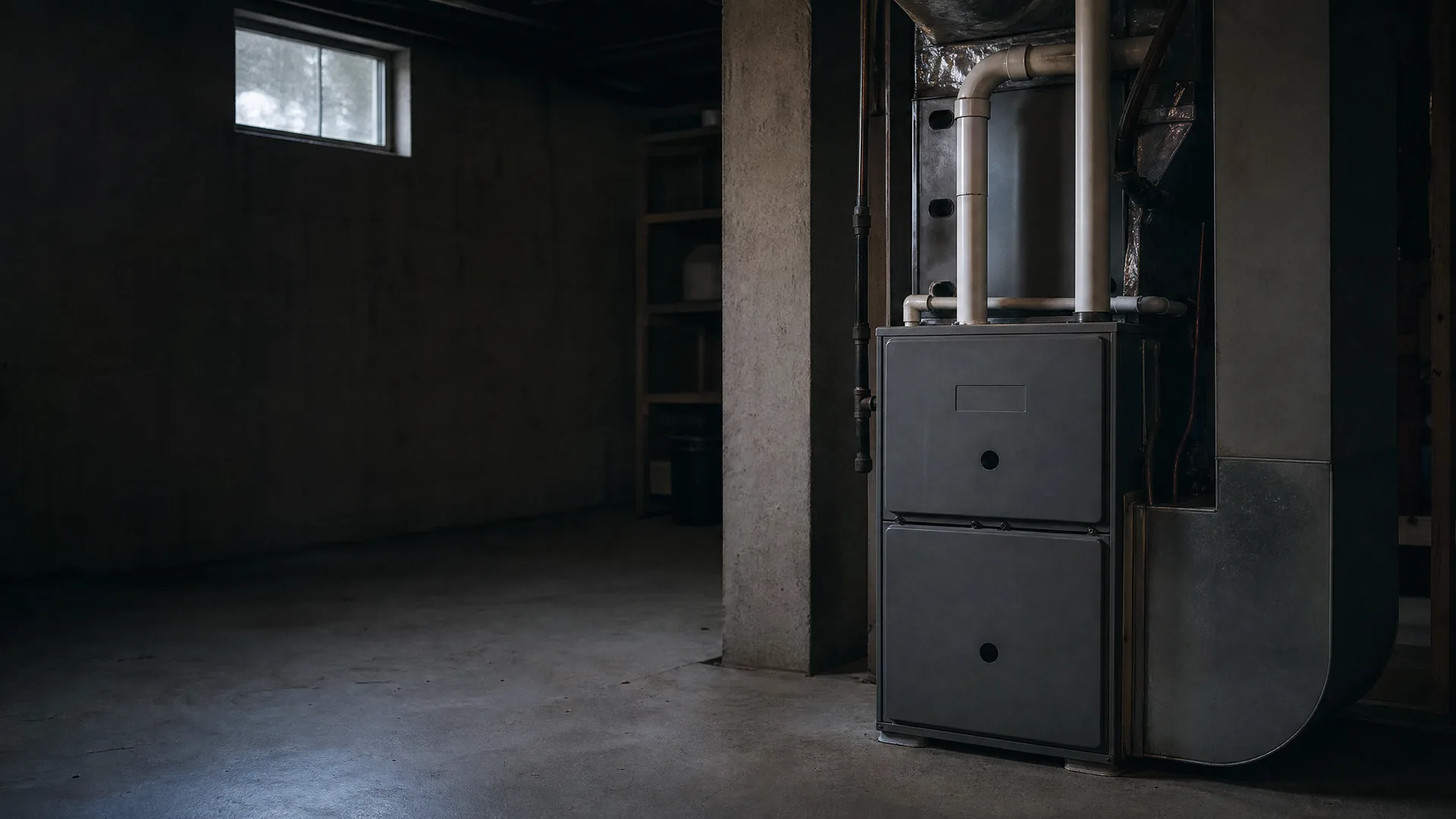
A gray high-efficiency furnace with white PVC vent pipes and attached ductwork stands beside a concrete support column in a dim, empty basement with bare concrete walls and floor and a small window.

You go down to check the thermostat setting one more time before bed. It's a Tuesday in November, already dark outside. The basement light buzzes on and the furnace sits there, cabinet closed, not running. You put your hand near the vent anyway, out of habit, and feel nothing. A thin haze of dust hangs in the air near the cabinet, the kind that shows up when the blower hasn't kicked on in a while. Upstairs the house is holding at 64. You stand there a minute, listening for the click that usually starts it up, and it doesn't come. You go back upstairs still in your socks, colder than you were five minutes ago.

A pro who works on furnaces

You've already gone down to the basement and listened. You've felt the cold room upstairs and watched the thermostat lie to you about it. If any of that sounds like your house, the question left is whether to wait and see or get someone to look at it before the next cold snap pins you down. Waiting usually means the same problem, worse, on a night when you'd rather not be calling around. Finding someone yourself means searching contractors you don't know, calling a few, explaining what the furnace is doing each time, then sitting with quotes trying to guess who's right. Rhode Island winters don't leave much room for a furnace that's on the fence, and with what power costs here, a furnace struggling to keep up is already costing you more than it should. Send the request through and a contractor who knows these furnaces gets it, and calls you. That part stops being your problem to manage.

Call now and wait it out

You notice the short cycling or the cold upstairs room tonight. You could start looking into it yourself: search for a furnace repair company in Rhode Island, call a few, explain what the furnace is doing, wait for someone to call back, then do it again with the next name on the list because the first one can't get out for a week. Meanwhile the furnace keeps running the way it's been running, and a cold snap doesn't check your calendar first. Every day spent comparing companies is a day the heat exchanger or the blower motor keeps working harder than it should, and a problem that's manageable now can turn into a furnace that won't start at all.

Get matched and skip the searching

You answer a few questions about what your furnace is doing, the banging, the cold rooms, the short cycling, whatever it is, and a contractor who works on furnaces in Rhode Island reaches out to you. You explain it once. No list of companies to call, no voicemail tag, no retelling the story to three different people before anyone looks at the furnace. The searching and comparing disappears, not the work itself. Someone still has to get down to that basement, open the cabinet, and find out what's actually wrong. What changes is that you're not the one spending your evening tracking down who can do it.

A woman in a cream sweater with her hair in a bun laughs while seated at a stone counter holding a glass of red wine, in a dimly lit interior with a sofa, houseplants and a large window at night.
A woman with long dark hair in a cream knit sweater laughs while looking off to the side, seated in front of a dimly lit kitchen with an island, stools, open shelving and a potted plant, with a glass of red wine in the foreground.
A smiling woman with long dark wavy hair in a light knit sweater sits at a marble counter with a glass of red wine, with a dimly lit living room and kitchen in the background.
A smiling woman with long wavy brown hair in a beige sweater sits at a white marble counter with a glass of red wine, with a living room, dining table and kitchen cabinets behind her.

A repair call

A technician checks the heat exchanger, the flame sensor, the blower, and fixes what's failing. You know within a visit whether the furnace is worth keeping going.

Get a local pro

A new furnace

If the furnace is old or the damage is past fixing, replacement means a cold spell doesn't turn into a dead furnace mid-January with nowhere to turn.

Get a local pro
An older gas furnace with a louvered front panel stands on a concrete basement floor beside large sheet-metal ductwork, a metal flue pipe, copper piping and wood framing.
Before you get your furnace repair
A beige high-efficiency furnace stands on a concrete basement floor beside sheet-metal ductwork, with white PVC vent pipes, flexible conduit and copper and steel piping running up a concrete wall to an electrical box.
After you get your furnace repair
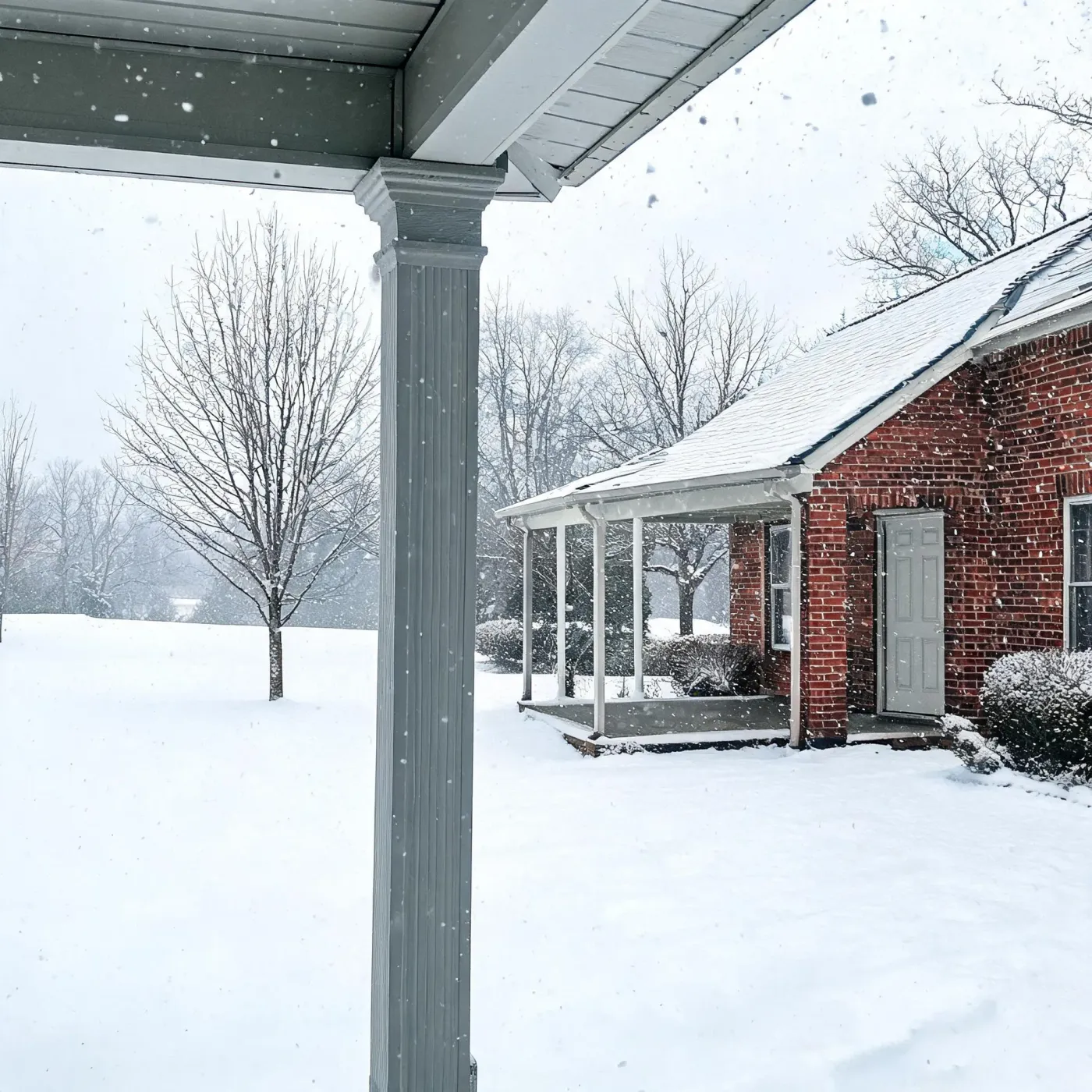
View from under a covered porch with a gray square column toward a red brick house with a white-columned porch and gray door, with falling snow covering the yard, roof, and bare trees.

Statewide, winter nights average 23°F, according to NOAA climate data. That's not a cold snap, that's a normal Tuesday night from December through February. At that temperature your furnace isn't cycling on for a few minutes here and there, it's running long stretches just to hold 68 indoors. A furnace that's already short cycling or struggling to heat one room has no slack left when nights sit in the low 20s for weeks straight. This is the stretch where a weak furnace stops keeping up and starts losing ground, room by room, night after night.

NOAA nClimDiv 1991-2020 county normals weighted by homes

A gray high-efficiency furnace with white PVC vent pipes stands in an unfinished basement beside sheet-metal ductwork, gas piping, and insulated stud walls on a concrete floor.
A furnace like this holds its heat steady all night without the cabinet rattling or the burner smelling hot.
A beige sheet-metal furnace with a louvered upper panel stands on a concrete basement floor, connected to galvanized ductwork, white PVC vent pipes, and a metal gas line with an electrical box.
Galvanized ductwork and a mid-efficiency cabinet like this can still be sound, but a louvered panel that's loose or rusted is worth a second look.

Winter nights average 23°F statewide

At 23°F, your furnace is running for stretches, not short bursts, most nights from December through February. A unit that's already short cycling or struggling to heat the upstairs doesn't get a break at that temperature. It just keeps working harder, for longer, every night.

NOAA nClimDiv 1991-2020 county normals weighted by homes

A furnace that short cycles, bangs when it kicks on, or leaves one room cold all winter is telling you something, and at 23 degrees on a normal Rhode Island night, it won't get a break long enough to sort itself out. You've checked the basement, felt the cold rooms, listened to what the thermostat won't tell you. Nothing about that gets better on its own once the real cold sets in from December through February. Getting it looked at now means you find out while there's still time to fix it or replace it on your terms, not at midnight during the first real cold snap. That's the choice sitting in front of you: deal with it this week, or deal with it when it fails and you have no heat and no good options. The furnace isn't going to decide this for you quietly. You already have what you need to decide.

A smiling bearded man in a navy crewneck sweater sits at a dinner table with a glass of red wine, plates and glasses in the foreground, in a dimly lit room with a lamp and framed picture behind him.
A woman in a dark gray sweater reclines on a light sofa with eyes closed and a slight smile, under a textured gray blanket with an open book resting on her lap, with a lit table lamp and plant in the background.

The right pro for this job

You don't have to spend tonight searching for a furnace repair company in Rhode Island, calling a few, and explaining the short cycling or the cold upstairs room over and over while you wait on quotes. Get matched with a contractor who knows these winters and let them reach out to you. From there, a repair call tells you within a visit whether the furnace is worth keeping going, or whether a new one is the better bet before the next 23 degree night.

Match me with a pro

Explain the job once and skip repeating it on every call.

Asking costs nothing, and the choice to hire stays yours.