
What size furnace a Rhode Island home needs
There's no single size that fits every house, and anyone who quotes you one without looking at your home is guessing. The right size comes from a load calculation, a room by room check of your square footage, your insulation, your windows, and how many walls face the cold. A furnace sized by square footage alone almost always comes out too big. An oversized furnace short cycles, heating the house fast and shutting off before it pulls moisture and cold out of the walls and floors, so rooms feel drafty even with warm air blowing. It also wears out the parts that start and stop it sooner. Too small, and it runs constantly on the coldest days and still can't keep up. In a Rhode Island winter, that gap shows up fast. Getting the size right matters more than any other decision in a furnace installation, because it's the one thing that can't be fixed after the unit is sitting in your basement.




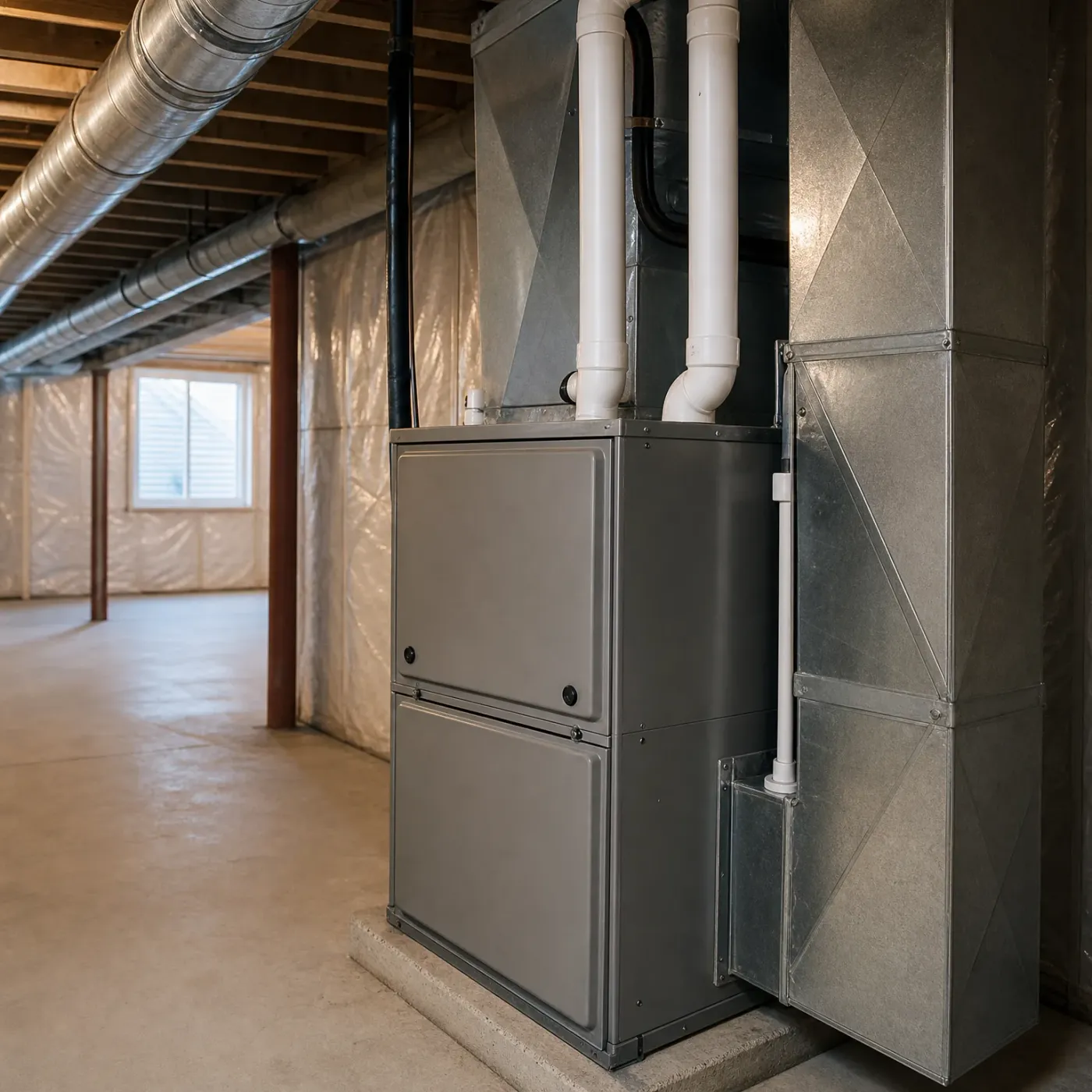
A furnace that doesn't match your house causes problems you'll notice within the first winter. Too big, and it blasts heat into a room, hits the thermostat setting, and shuts off before the rest of the house catches up. That on off cycling happens more than it should, and the igniter and blower motor take the wear for it. Too small, and the furnace runs and runs on a cold night without ever bringing the house up to temperature. Contractors size a furnace with a Manual J load calculation, which looks at your square footage room by room, along with your windows, your insulation, and your ceiling height. It also weighs Rhode Island's design temperature, meaning how cold it's likely to get here on the worst night of the year, since that's the load the furnace actually has to meet. Two houses with the same square footage can end up needing different furnace sizes if one has older windows or thinner attic insulation than the other. That's why a number pulled from a chart, or from what the house next door has, isn't a safe way to size yours.
Why the right size matters
- A furnace sized too big for your house will short cycle, shutting off before it evens out the temperature room to room.
- Short cycling wears out the igniter and the blower motor faster, since both start and stop more often than they should.
- A furnace sized too small will run long stretches without catching up, and on the coldest nights it may not catch up at all.
- Manual J is the load calculation contractors use, and it accounts for your square footage, your windows, your insulation, and your ceiling height.
- Rhode Island's design temperature, the coldest it's likely to get on a bad night, is what the calculation sizes your furnace against.
- Two houses the same size can need different furnaces if one has more windows or less insulation in the attic.


A pro who works on furnaces
Skip the round of in-home estimates for a new furnace.
A local installer who puts in furnaces gets your project.
It costs nothing to send, and you don't have to hire anyone.

A furnace that's the wrong size shows up on your gas bill first
You'll notice it in January, when the furnace runs long stretches but the back bedrooms still feel cold, or it shuts on and off so often the house never quite settles. Either way, you're paying for heat you're not getting the benefit of. With gas prices and the state's electric rates both running high, a furnace that's mismatched to your house costs you twice: once in fuel burned for no reason, and again when the extra wear sends you looking for a repair tech sooner than you should have to.
Getting the size right means someone has to actually look at your house, not just ask its square footage over the phone. That's the part most homeowners end up doing themselves, calling a few contractors, explaining the house to each one, waiting on quotes that don't agree with each other. Once you're matched with a contractor who handles installations like yours, that back and forth is off your plate, and the person who reaches out already knows what they're coming to look at.


A contractor measures every room's square footage and ceiling height.
They tally your windows, doors, and insulation levels.
They run a Manual J load calculation for your home.
The result sets the exact BTU output your furnace needs.
Winter nights average 23°F statewide
At 23°F on a typical winter night here, your furnace has to run long enough to make up that difference and hold it, all night, for months. Size it wrong and it either struggles those nights or short cycles through the milder ones.
NOAA nClimDiv 1991-2020 county normals weighted by homes
The Right Size, Not a Guess
- A Manual J load calculation is the only way to know the BTU output your Rhode Island home needs.
- Guessing a size, or buying based on the old furnace's rating, risks short cycling or a furnace that can't keep up on the coldest nights.
- The right size keeps gas use in line with what the house actually needs, which matters when electric rates here run high and a struggling furnace leans on backup heat.
- Rooms, windows, insulation, and ceiling height all factor into the number, which is why two houses on the same street can need different sizes.
- Finding a contractor who'll actually run the calculation instead of quoting a size off the top of their head takes time most homeowners don't have to spend calling around.
- Matching with a contractor who handles the load calculation and installation means you explain your situation once instead of repeating it to every company you call.
So the answer to what size furnace your Rhode Island home needs is the size the Manual J calculation gives you, not a number off a chart or whatever the old unit was rated for. That calculation accounts for your square footage, your windows, your insulation, your ceiling height, the things that make your house different from the one next door even if it looks the same from the street. Skip it and you're guessing, and a guess either leaves you short on the coldest nights or saddles you with a furnace that short cycles through the milder ones, wearing out parts faster than it should. Getting that number right is also what keeps your gas use where it belongs, which matters more here than in states where power costs less.
What's harder to shortcut is finding someone who'll actually run that calculation instead of eyeballing your square footage and naming a size. That part usually means calling a handful of contractors, explaining your house and your situation to each one, and waiting on quotes that may not even be based on the same math. Matching with a contractor who does the load calculation as part of the installation means you lay out your situation once. No repeating yourself to five companies, no sorting through quotes to guess which one actually did the work of figuring out the right size. The number itself still comes from your house. Getting matched with the right contractor just means someone looks at it properly the first time.

Get your furnace to the right pro
Describe the project once instead of to every installer.
No charge to send it. You decide if you hire them.