Profile view of a bearded man wearing a black baseball cap and a dark gray T-shirt against a plain light background.

What temperature to set the heat in a Rhode Island winter

Step 1 of 3: Equipment

Most people here keep the thermostat between 68 and 70 degrees during the day and let it drop to 62 to 65 at night. That range keeps a gas furnace running in steady, shorter cycles instead of fighting to catch up, which is what happens when the house is allowed to go colder for hours and then has to recover fast. A Rhode Island winter means the furnace is working from November into March, sometimes longer, so the setting you pick gets repeated thousands of times a season. Going lower at night only pays off if the furnace can recover without strain, and a unit that's overdue for maintenance will struggle more at the extremes than one that's been looked at recently. If your house won't hold a steady temperature, or one room is always colder than the rest, that's usually a sign the furnace needs attention, not that the thermostat is set wrong.

A gray-haired bearded man in a dark coat and scarf dusted with snow stands smiling in a dimly lit entryway with a white front door, a side table with a lit lamp, an oval mirror, and a patterned rug.
An older bearded man in a dark snow-dusted coat and gray scarf stands just inside a dimly lit home entry, with a framed picture, lit table lamp, and an adjoining room with a fireplace behind him, and snow visible through the open door.
A gray-haired, bearded man in a dark snow-dusted coat stands smiling in a dimly lit entry hall with a staircase, a lit table lamp, a framed picture, and a living room visible through a doorway.
An older man with gray hair and a beard, wearing a dark jacket dusted with snow, stands smiling in a dimly lit hallway with lamps and a living room visible behind him.

How Your Furnace Actually Responds

  • A furnace that holds one steady setpoint cycles on and off in short bursts, which wears less than long runs spent catching up.
  • Dropping the thermostat more than a few degrees for the night makes the furnace run longer in the morning to recover, often canceling out the savings.
  • The thermostat only tells the furnace when to fire, it has no say over how evenly heat moves through the ducts to each room.
  • A furnace set too low for too long lets a house lose heat into its walls and framing, and that heat has to be replaced before the air feels warm again.
  • Rooms far from the furnace or with ductwork running through an unheated space will read colder than the thermostat setting no matter where you set it.
  • A programmable or smart thermostat can step the temperature down gradually instead of in one jump, which is easier on the furnace than a sharp swing.

A furnace doesn't know what temperature feels comfortable. It only knows the number on the thermostat and whether the air around that sensor is above or below it. When the house holds steady, the burner fires, brings the air up a degree or two, and shuts off. Short cycle, small job, done. Push the setpoint down overnight and the house keeps losing heat the whole time you're asleep, into the framing, the walls, whatever is cold enough to pull warmth out of the air. By morning the furnace isn't just warming air anymore, it's warming the house back up from scratch, and that takes a longer run than the few degrees on the dial suggest. The thermostat also only controls one thing: when the burner turns on. It has nothing to do with how that heat gets distributed once it leaves the furnace. A duct run through a cold basement or an attic loses heat along the way, so a bedroom at the far end of the house can sit several degrees under what the thermostat reads, even with the furnace working exactly as it should. That's a ductwork and insulation problem, not a setpoint problem, and no amount of adjusting the thermostat fixes it. If a setback is part of the routine, doing it gradually, a degree or two stepped down rather than one jump, asks less of the furnace than a sharp swing does.

A gray gas furnace stands on a concrete basement floor, connected to sheet-metal ductwork, white PVC vent pipes, and a yellow gas line, with plastic sheeting covering the walls.
A furnace set once and left alone runs short, even cycles and stays clean around the burner and heat exchanger.
A metal furnace with louvered panels stands against a concrete basement wall, connected to sheet-metal ductwork and a round flue pipe, with wooden framing posts and a pipe nearby.
A furnace pushed up and down all day works harder to recover each time, and dust builds up faster on an older unit like this one.

Hold the thermostat where you set it and the furnace settles into a rhythm: on for a while, off for a while, burner staying relatively clean through the season. Push it up every time you walk in cold and down every time you leave, and the furnace spends its winter recovering instead of just running. That shows up two ways. The power bill climbs, and in Rhode Island that bill was already steep before the furnace started working harder. And the furnace itself takes the wear, the kind that doesn't announce itself until the burner's caked or the heat exchanger is stressed enough to crack. That crack matters beyond the repair cost. A cracked heat exchanger can put exhaust where it shouldn't be. None of this means watching the thermostat all day. It means picking a range and leaving it, then having someone check the furnace once a year so the small wear gets caught before a January night turns it into no heat at all.

What a Steady Setpoint Saves You

  • A thermostat held at the same setting all winter means fewer cold mornings waiting on the house to catch up.
  • Rhode Island winters run cold enough that a furnace working overtime shows up fast on a power bill that's already among the highest in the country.
  • A furnace short-cycling evenly tends to stay cleaner around the burner, so dust and soot build up slower between maintenance visits.
  • Skipping maintenance on a furnace that's constantly ramping up and down lets small wear turn into a breakdown on the coldest night of the year.
  • A dirty or strained furnace can crack a heat exchanger sooner, which is a safety problem as well as a repair bill.
  • Keeping the setpoint steady and scheduling a yearly checkup are the two things that actually keep a gas furnace running the way it should through a Rhode Island winter.
An older metal furnace with PVC and metal pipes stands on a concrete basement floor beside galvanized ductwork, with wooden stairs and a water tank in the background.
Before you get your furnace maintenance
A gray high-efficiency furnace in a basement with sheet-metal ductwork, white PVC vent pipes, metal plumbing lines, a condensate pump on the floor, and a window showing green trees outside.
After you get your furnace maintenance

Get your furnace to the right pro

Send it once and finding someone is no longer on you.

It costs nothing to send, and you don't have to hire anyone.

Why the setting matters more here

A furnace fires until the air coming out of the vents hits a set point, then shuts off. Set the thermostat too high and it just runs longer to get there, pulling more gas each cycle. Rhode Island winters give a furnace plenty of reason to run already, with stretches of nights in the 20s from December through February. Keeping the setting modest doesn't change how the furnace works, it just means fewer and shorter calls for heat. With power rates here running high, that difference shows up on the bill before it shows up anywhere else.


What a tune-up checks for

A maintenance visit looks at the parts that decide whether that setting runs efficiently or not: the burner flame, the heat exchanger, the blower, the filter. A furnace that's been neglected can still hold 68 degrees, but it burns more gas doing it and strains parts that wear out faster under load. Scheduling a visit before the cold settles in, rather than after a system is already working hard through January and February, means those parts are inspected while the furnace is idle, not while it's the only thing standing between the house and single digits outside.

A woman wrapped in a thick beige fleece blanket sits on a sofa with an open book on her lap, beside a lit table lamp, with a frost-covered window behind her.
A gray-haired woman in a cream knit sweater stands in a dimly lit kitchen at night, looking to her right, with a round loaf of bread in the foreground and a dark window and potted plant behind her.
A basement utility area with a gray furnace, sheet-metal ductwork, pipes, plastic-covered walls, a concrete floor, and a black shelving unit holding storage bins.

Running clean

This is what a furnace looks like doing its job without strain. The ductwork and gas lines are tight, the condensate line drains clear, and the cabinet shows no rust. A setting left alone all winter keeps it burning steady, like this.

A gray metal furnace with louvered vent panels stands on a concrete basement floor beside galvanized ductwork, gas and plastic pipes, and foil-faced insulation along the ceiling and wall.

Showing its age

Rust on the cabinet and an older burner mean less margin for a thermostat pushed up and down all day. A furnace like this one working overtime to recover from a cold setback has less room to spare than a newer unit does.

Why does the house feel cold even with the heat on

You bump the thermostat up a few degrees and the house still feels off, cold near the windows, warm by the vents, the furnace running longer than it used to for the same result. Some rooms take forever to catch up and others overheat before they do. That's the furnace working harder to make up for a setting that keeps moving instead of holding steady. Left like that through a full Rhode Island winter, it wears the burner and heat exchanger faster and shows up on the gas bill before it shows up as a breakdown. A furnace that struggles to keep up now is also more likely to quit on the coldest night of the year, when it's working hardest.

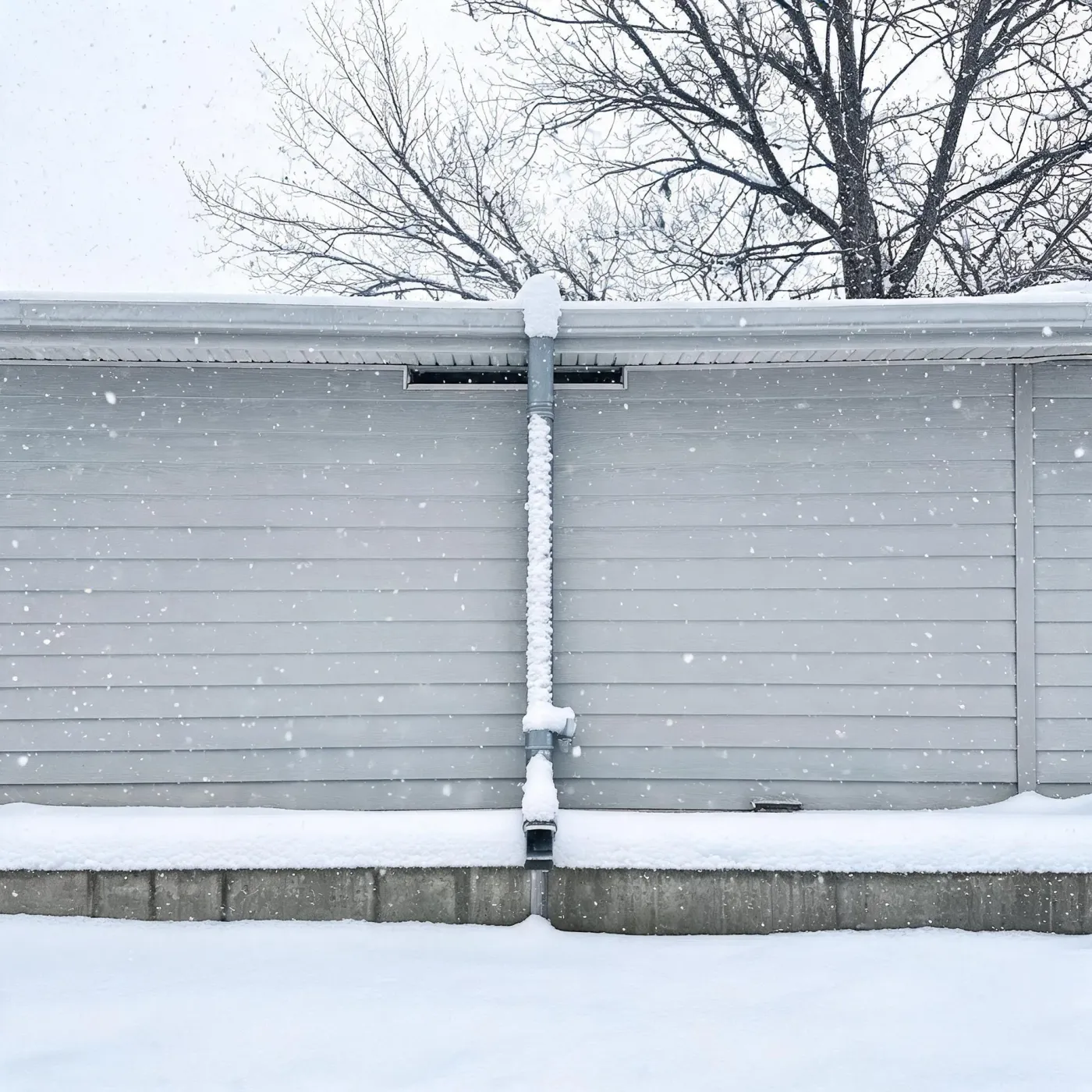
Exterior wall of a building with light gray horizontal siding and a snow-covered downspout running down its center, with bare trees behind the roofline and falling snow over deep snow on the ground.

Statewide, winter nights average 23°F, according to NOAA climate data. That's cold enough that your furnace is running most of the night just to hold whatever setpoint you leave it at, not just kicking on for a few minutes here and there. On a night like that, a furnace left at one steady setting cycles on and off in short, even bursts. Push the thermostat up before bed or down in the morning and it has to run long and hard to catch up, pulling more gas each time. You'll notice it most near the windows, where the cold off the glass fights whatever heat is coming out of the vents.

NOAA nClimDiv 1991-2020 county normals weighted by homes

Does it matter what thermostat setting I use at night versus during the day

You've heard that a steady thermostat setting is easier on a furnace than bouncing it around, so the idea of a night setback feels like it might work against that. You're not trying to save a few dollars at the cost of wearing out the furnace faster, and you want to know if dropping the temperature for sleep actually causes the long, hard recovery runs that cause problems, or if that's only an issue with bigger swings.

A small drop for sleep is fine, a big one isn't

A couple of degrees down at night, say from 68 to 65, doesn't ask much of the furnace in the morning. It picks back up in a normal cycle. The trouble starts when the drop goes past 5 or 6 degrees, because then the furnace has to run flat out for a long stretch to climb back to daytime temperature, and that long run is what wears on the burner and heat exchanger. With nights in Rhode Island averaging in the low 20s, that recovery climb takes longer here than it would somewhere milder. A modest night setback is worth doing. A deep one just trades a lower number on the thermostat for a harder morning on the furnace.

  1. The thermostat calls for heat when the air drops below setpoint.

  2. The igniter glows, then the gas valve opens to feed the burners.

  3. Burners fire and heat the metal heat exchanger inside the furnace.

  4. The blower pushes air across the hot exchanger and into the ducts.

Winter nights average 23°F statewide

At 23 below freezing most winter nights, your furnace isn't cycling on and off, it's running long stretches just to keep up. A setpoint you leave alone all night means it settles into one steady burn instead of chasing a number that keeps sliding.

NOAA nClimDiv 1991-2020 county normals weighted by homes

A gray furnace with white PVC vent pipes stands beside sheet-metal ductwork in a basement with a smooth concrete floor, exposed wood framing, and plastic sheeting on the walls.

Furnace holding steady

This is a furnace left on one setpoint all winter. The gas lines and vent pipes run clean along the wall, the cabinet shows no rust, and the burners fire in short, even bursts instead of long stretches trying to catch up. A unit worked this way tends to stay cleaner around the burner and heat exchanger for years.

A beige furnace with two access panels stands against a concrete basement wall, with galvanized sheet-metal ductwork, a white PVC pipe, flexible conduit and insulated ducting around it.

Furnace under strain

This furnace has been cycling long and hard, likely from a thermostat pushed up and down through the day. Rust has started on the cabinet, and the piping along the wall shows its age. A furnace working overtime like this is burning more gas per cycle, which shows up fast on a bill already among the highest in the country.

A woman in a cream cardigan and jeans stands with one hand raised facing an open front door of a gray horizontal-siding house, with a black lantern wall light, a potted shrub with yellow flowers, and a stone-faced porch column.

68 to 70 in the day, 62 to 65 at night, left alone

That's the range that works in a Rhode Island winter. Pick a setpoint in that band and leave the thermostat there instead of nudging it up and down through the day. The furnace settles into short, even burns, the house holds its temperature, and you stop paying for the long recovery runs that come from chasing a number that keeps moving.

A furnace that's never been looked at can hold that setpoint less well than one that has, burners running longer than they should, dust building up where it shouldn't. If yours hasn't had maintenance this season, or you're not sure when it last did, that's worth sorting out before the cold nights stack up. Answer the few questions on this page and you'll be matched with a contractor who services furnaces in your area. They'll reach out to you directly. From there, finding someone isn't something you have to keep track of.

Interior corner of a room with a window and sheer curtain at left, a gray upholstered sofa with a cushion at right, and a round wooden table holding stacked books and a round vase with an olive branch.
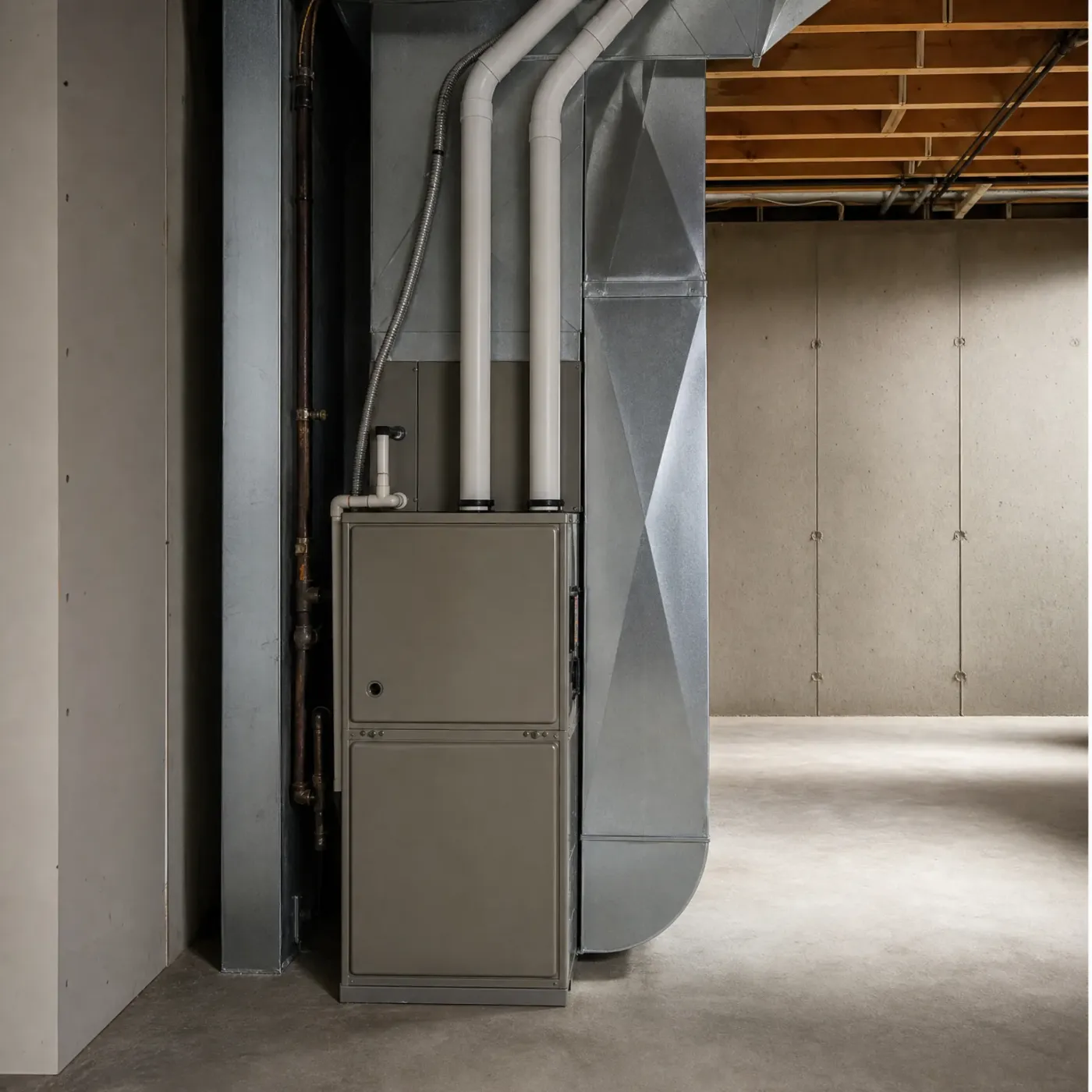
A gray high-efficiency furnace in an unfinished basement, connected to sheet-metal ductwork and two white PVC vent pipes, with copper piping and exposed wood floor joists nearby.

The right pro for this job

Connect with a pro

Send the form and the furnace tune-up stops being something to remember.

No charge to send it. You decide if you hire them.