






Why your furnace is blowing cold air in Rhode Island

Step 1 of 3: Equipment

A furnace blowing cold air usually means it's not igniting, or the blower is running without heat behind it. On a gas furnace, the igniter or flame sensor can fail, so the burners never light but the blower still pushes air through the ducts. That air feels cold because there's no flame warming it. Sometimes it's simpler: a thermostat set to "fan on" instead of "auto" will run the blower constantly, including between heating cycles when the furnace itself is idle. A clogged filter can also starve the burners of airflow and trip a safety switch that cuts the flame but leaves the fan running. None of these fix themselves, and running a furnace in this state in Rhode Island through a cold snap means the house won't hold heat when you need it most. Whatever the cause, it's usually a part that needs testing with the furnace apart, not something to diagnose by ear.

A man with grey hair and stubble in a dark sweater sits on a grey sofa indoors, looking off to the side, with a potted plant and a sunlit window behind him.
A man with gray hair, a beard and glasses, wearing a dark green sweater, sits on a gray sofa in a sunlit living room with a potted plant, table lamp and wooden sideboard behind him.
A middle-aged man with graying hair and a short beard sits on a blue sofa in a living room, looking toward a window, with a bookshelf, lamp and framed picture in the background.
A man with graying curly hair and a dark green sweater sits on a gray sofa in a sunlit living room, looking off to the side, with a framed picture, shelving, an armchair and a window with sheer curtains behind him.

Is this just the fan running, or is the furnace actually broken?

Stand near a vent and feel it. If air is moving but it's not warming up after a few minutes, the burners aren't lighting. You might hear the blower kick on like always, maybe a click or two from the igniter trying, but no whoosh of flame. Sometimes the thermostat shows the system running and the house still drops a degree at a time. With gas this expensive to heat with in Rhode Island, a furnace that runs without producing heat is pulling power for nothing while your rooms get colder. Left alone through a cold snap, that's a house that can't hold temperature when you need it most, and pipes in colder parts of the house are the first thing to worry about.

A beige residential gas furnace with white PVC vent pipes, copper and yellow gas lines, and adjacent sheet-metal ductwork stands on a concrete floor beside a plain white wall.

Why the flame sensor fails first

The flame sensor sits in the burner compartment and tells the furnace a flame is actually present. Over a season it collects a thin layer of soot, and once that coating builds up it can't read the flame anymore. The furnace shuts the gas valve as a safety measure, but the blower still has its own call for air and keeps running. That's why you get cold air through the vents instead of no air at all.

A gray high-efficiency furnace with white PVC vent pipes and metal ductwork stands on a concrete floor beside a plain off-white wall in a basement.

What the igniter has to do

A furnace built in the last few decades almost certainly uses a hot surface igniter instead of a standing pilot. It has to heat up to a specific temperature in under a second to light the gas, and that thin ceramic strip is brittle. It weakens with age and eventually cracks or stops heating enough to ignite the burners. When it fails, the control board still runs the blower on schedule, pushing room temperature air through ducts that were sized for 120 degree supply air.

Why does my furnace blow cold air for a few minutes before it warms up?

You've noticed the vents run cold right after the furnace kicks on, then warm up a minute or two later. It happens every cycle, not just once, and you're trying to figure out if that's how a furnace is supposed to work or if something's wearing out before it gets to your thermostat setting on a cold Rhode Island night.

That short cold spell at startup is normal, as long as it doesn't last

A furnace doesn't light the burners the instant it starts. The blower often comes on first, or close to it, and there's a short delay built in before the burners fire and the heat exchanger warms up. Until that metal warms, the air moving past it is still cool. A couple minutes of this on every cycle is normal. What's not normal is five or ten minutes of cold air, or air that never warms up at all. That points to a burner that's slow to light, a flame sensor losing its read, or a heat exchanger that isn't heating the way it should, and any of those is worth having a licensed furnace tech look at before the next cold snap.

A dark high-efficiency furnace on a concrete pad in a basement, connected to galvanized ductwork, white PVC vent pipes, and copper and black gas piping, with concrete walls and wood framing nearby.

Burners lit, heat where it should be

This is what a furnace doing its job looks like. The burners fire, the blower pulls that heat across the cabinet, and warm air moves out through the ductwork. The gas line, the exhaust pipe, the condensate line, all doing what they're built for, nothing running without the others.


A gas furnace with a louvered upper panel stands on a concrete pad in a basement, flanked by sheet-metal ductwork, white PVC and metal pipes, and insulated columns.

Air moving, no heat behind it

Here the blower may still be pushing air through that ductwork, but something upstream of it has stopped working. Could be the igniter, could be the flame sensor, could be the gas valve not opening. A furnace this age has more parts worn down enough to be the cause.

A woman with shoulder-length brown hair wearing a beige knit cardigan sits in a gray upholstered armchair near a window, looking off to the side with a slight smile, with bookshelves blurred in the background.
A woman and a sleeping child wrapped together in a cream knitted blanket on a couch, with a potted plant, framed photo and lit lamp in the background.
A gray high-efficiency furnace with two white PVC vent pipes stands against sheet-metal ductwork in an unfinished basement with concrete floor and walls and exposed wood joists.

Matched to your furnace job

Your request goes to one pro, not a list of companies.

A local pro who knows furnaces gets your details and gets in touch.

Get my match

There's no charge for the request.

Cold Air: Call or Wait

Call for repair

  • Cold air from every vent, every cycle, with no warm-up at all usually means the burners aren't lighting.
  • A burner that lights then shuts off within a minute often points to a flame sensor too coated to hold the flame.
  • If the blower runs constantly and never stops, a stuck relay or a bad limit switch can keep it going without heat.
  • A furnace that was fine last winter and just stopped lighting this season has a part that failed, not one that's wearing out slowly.
  • Rhode Island winters don't leave room to wait this out, since the house will keep losing heat while the furnace just moves cold air around.
  • A local contractor who services furnaces all winter here has likely seen the exact failure in your model before.

Keep watching it

  • A few seconds of cool air right when the furnace starts, before it warms up, is normal and not a sign of failure.
  • If the vents warm within a couple minutes and stay warm the rest of the cycle, the furnace lit and is working as it should.
  • A thermostat set to "on" instead of "auto" will run the blower between cycles, which feels like cold air but isn't a furnace problem.
  • If this only happened once and the next cycle ran warm, it may not be worth a service call yet.
  • Checking that the filter isn't clogged and the thermostat fan setting is right costs you nothing and rules out the simple explanations first.
A beige high-efficiency furnace with white PVC vent pipes stands beside galvanized sheet-metal ductwork in a basement with a concrete floor, exposed wood studs, and metal piping along the wall.
A furnace venting and firing the way it's built to, pulling combustion air in through one PVC pipe and pushing exhaust out the other.
An older beige furnace with a louvered vent panel stands on a concrete basement floor beside galvanized sheet-metal ductwork, a metal flue pipe and vertical pipes along a concrete wall.
An older furnace like this depends on a flue draft to clear exhaust, and a weak draft is a common reason the burners won't stay lit.
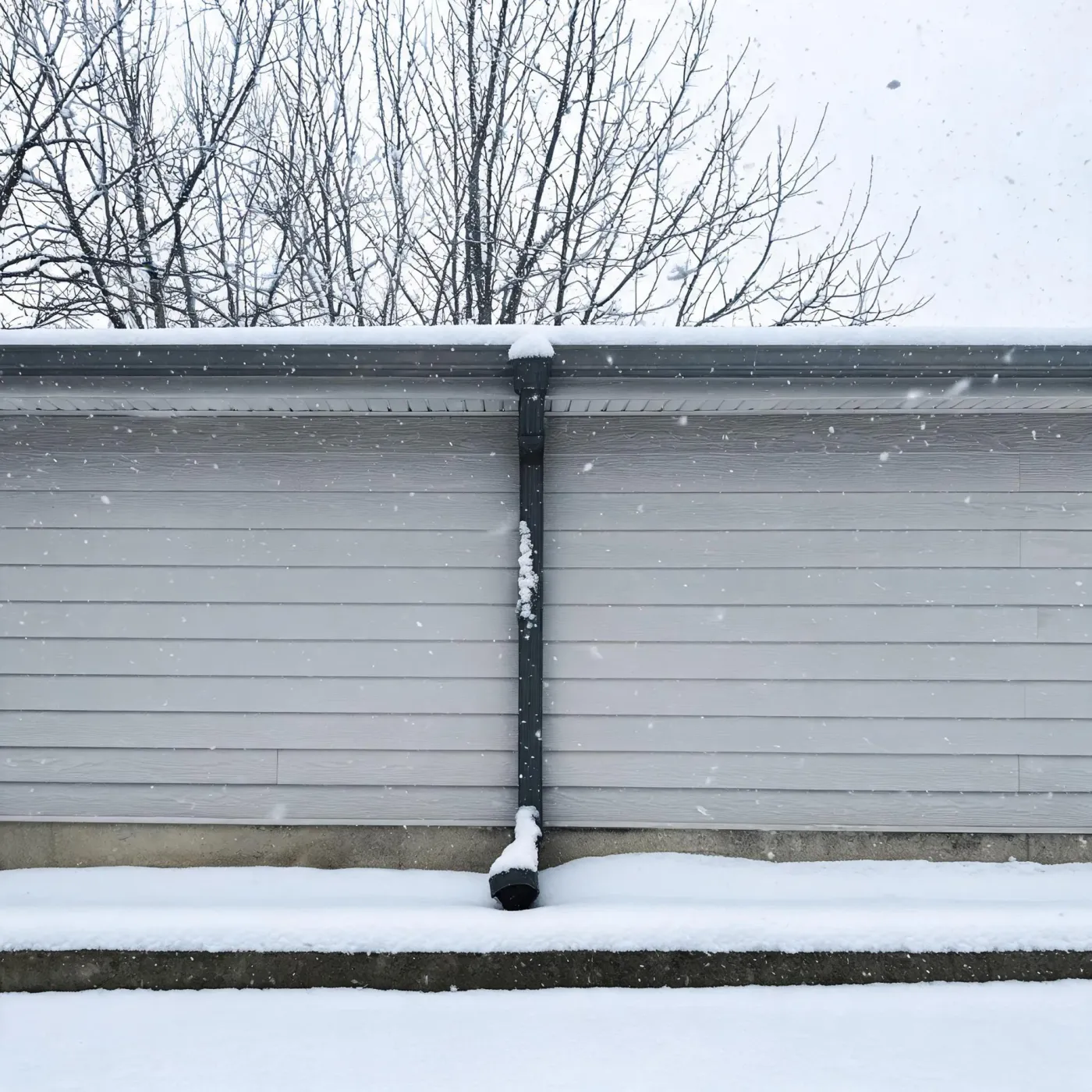
Exterior wall of a building with light gray horizontal siding and a dark downspout running to the ground, with snow on the roofline, steps, and ground, and bare trees behind during falling snow.

Rhode Island winter nights average 23°F statewide, according to NOAA. At that temperature a furnace is cycling on for long stretches, not short bursts, to keep up. If the igniter or flame sensor is already struggling, those long runs are when it shows: the blower keeps moving air on schedule even after the burners fail to catch, so you get a steady draft from the vents that never turns warm. A furnace in good shape handles nights this cold without trouble. One that's starting to fail usually gives you away on the coldest nights first, not the mild ones.

NOAA nClimDiv 1991-2020 county normals weighted by homes

A gray furnace cabinet in a basement, connected to galvanized sheet-metal ductwork and white PVC pipes, against a concrete wall with exposed metal piping and insulation overhead.
Before you get your furnace repair
A gray high-efficiency furnace with two PVC vent pipes stands in an unfinished basement beside sheet-metal ductwork, a framed and plastic-covered wall, and a bare concrete wall with vertical pipes.
After you get your furnace repair
  1. Thermostat calls for heat and signals the control board

  2. Inducer motor starts and proves draft through the vent pipe

  3. Igniter heats up or a hot surface starts to glow

  4. Gas valve opens and burners should light off the igniter

A smiling man in a denim shirt and white t-shirt stands in an open dark doorway of a stucco house, facing a woman with long brown hair and a green jacket seen from behind in the foreground.

Cold air from the vents has a cause, and it's fixable

A furnace blowing cold air isn't a mystery once someone opens the cabinet and looks. It's the igniter, the flame sensor, the draft, or the blower running past its own heat. Each of those fails in a way a trained eye catches fast, and each one has a fix. You don't need to know which it is before you call. You just need someone who's checked a hundred furnaces doing exactly this in exactly this kind of cold.

That's the part worth knowing as you decide what to do next. A licensed contractor working near you sees this furnace, or one just like it, every winter, and knows which part tends to go first in a cabinet like yours. When you ask for help through this page, you're matched with one contractor suited to your situation, not a handful competing for your call. They reach out to you directly, and you take it from there.

A gray upholstered sofa with a matching cushion sits beside a potted plant and a wooden table holding a small green plant in a stone pot, near a curtained window.
Kitchen corner with cream upper cabinets, oak lower cabinets, white marble-look countertop, beige tile backsplash, a ceramic vase of greenery, a wooden cutting board and bowl, and a black-framed window at right.
Interior corner of a room with a white-framed window and wide sill, beige walls with panel molding, a wooden cabinet holding a ceramic vase with a green leafy plant, and blurred shrubs and trees outside.
A wood-framed armchair with beige cushions and a woven lumbar pillow sits in a corner beside a large window overlooking green trees, with a tall ceramic vase holding leafy branches on the left and plaster walls and wood flooring.
Interior corner with a white-framed window above a sill, beige walls with baseboard molding, a greige shaker-style cabinet with brass knobs and a potted plant on top, light wood flooring and a woven jute rug.
A dark-framed six-pane window with white trim and sill set in gray horizontal lap siding, with hydrangea shrubs below and a white column and shingled roof section at left.

A furnace pro near you

The pro who reaches out is licensed in Rhode Island.

Request a pro

You only hire the pro if you want to.